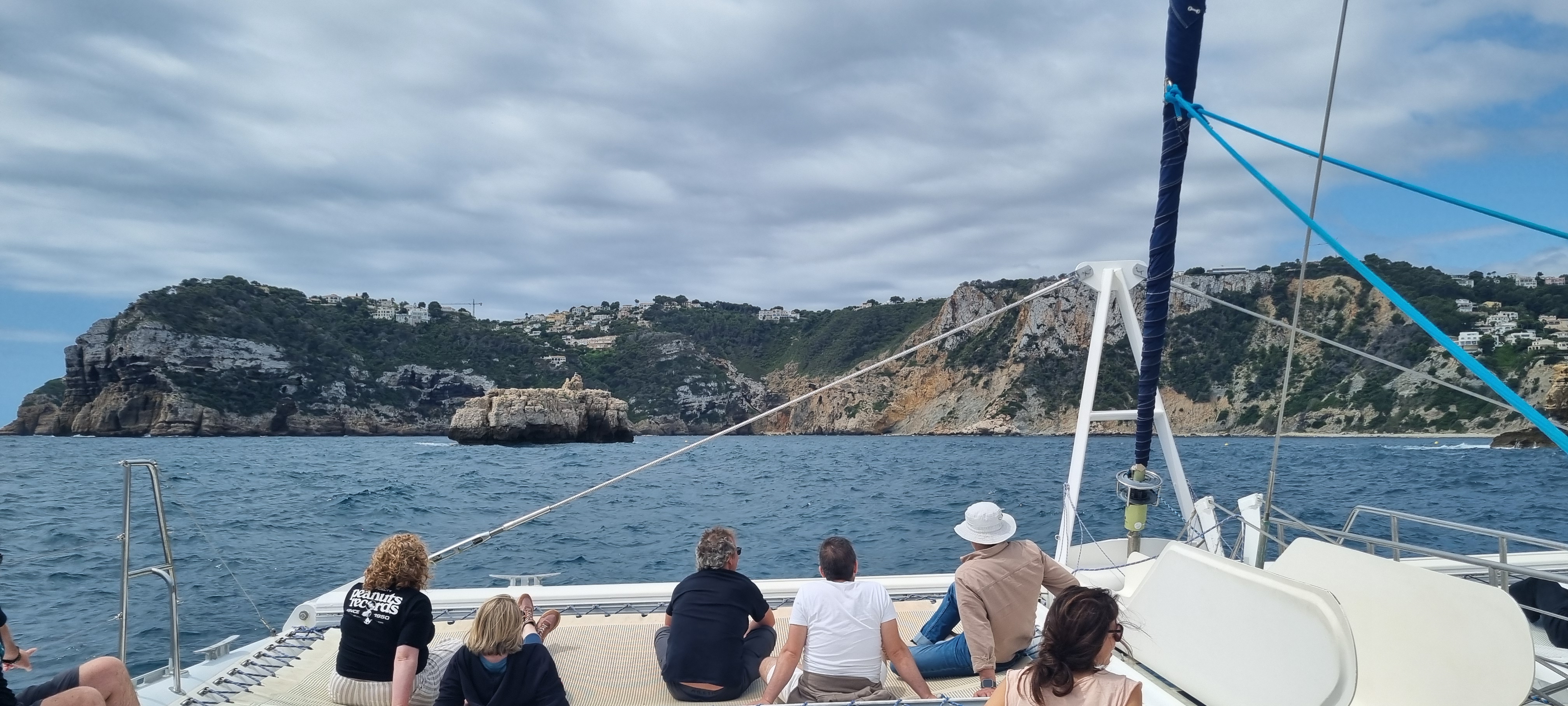
Over the course of three days, experts from across Europe gathered in Valencia to share experiences regarding the restoration of marine environments. Five representatives from Improve Aquatic LIFE attended to learn about knowledge and solutions that can contribute to the project’s ongoing work.
On June 9–11, a European LIFE meeting on marine restoration was held in Valencia, Spain. The meeting brought together nearly 100 experts and representatives of marine LIFE projects from various parts of Europe.
Representing Improve Aquatic LIFE were Henrik Möller, Jonas Gustafsson, Karin Olsson, Beatrice Alenius, and Hanna Sallen Lennarthson.
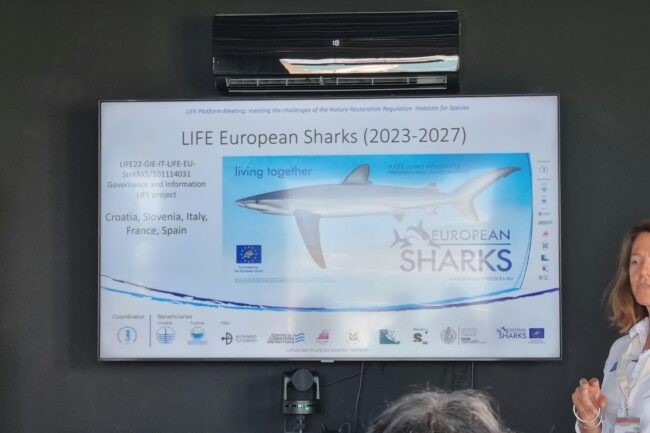
One of the projects presented during the conference was LIFE European Sharks, which works to conserve sharks and rays in the Mediterranean. Photo: Henrik Möller.
The focus was on the restoration of marine environments and on how the EU Nature Restoration Regulation can be implemented in practice. The program covered a wide range of species, habitats, and methods—from the restoration of eelgrass in northern Europe and the conservation of the Pinna nobilis mussel in the Mediterranean to efforts to protect Mediterranean sharks.
Several presentations also focused on the restoration of deep-sea corals off the Azores. Participants also heard about experiences from the Swedish Lophelia project.
Improve Aquatic LIFE did not have its own agenda item during the meeting, but representatives of the project participated in seminars and discussions clearly related to the project’s work. Since the group consisted of five people, the participants were able to split up among the various agenda items and thus gain insights from several areas.
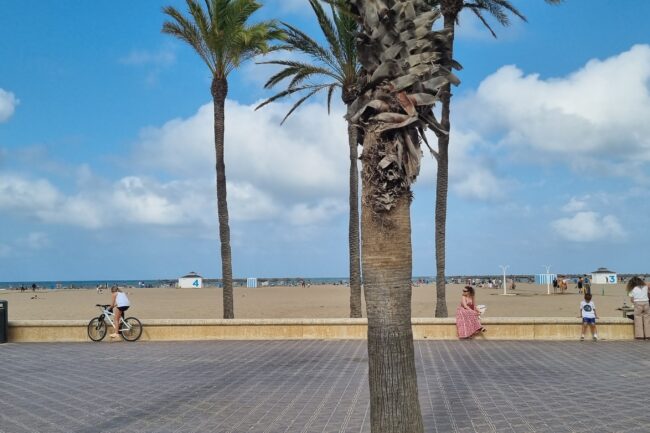
On the final day of the conference, a field trip by catamaran was organized to the Marina Alta Marine Protected Area, south of Valencia. Photo: Henrik Möller.
Field visit to a marine protected area
On the third and final day of the meeting, a catamaran excursion was organized to the Marina Alta marine protected area, south of Valencia.
The area contains large meadows of the seagrass Posidonia oceanica, as well as reefs, underwater caves, and important habitats for several marine species. The area is also significant for whales in the Mediterranean Sea.
The meeting provided an opportunity to make new contacts and learn from the experiences of other European LIFE projects. This knowledge will be valuable in Improve Aquatic LIFE’s ongoing work to restore and strengthen coastal and marine environments.