

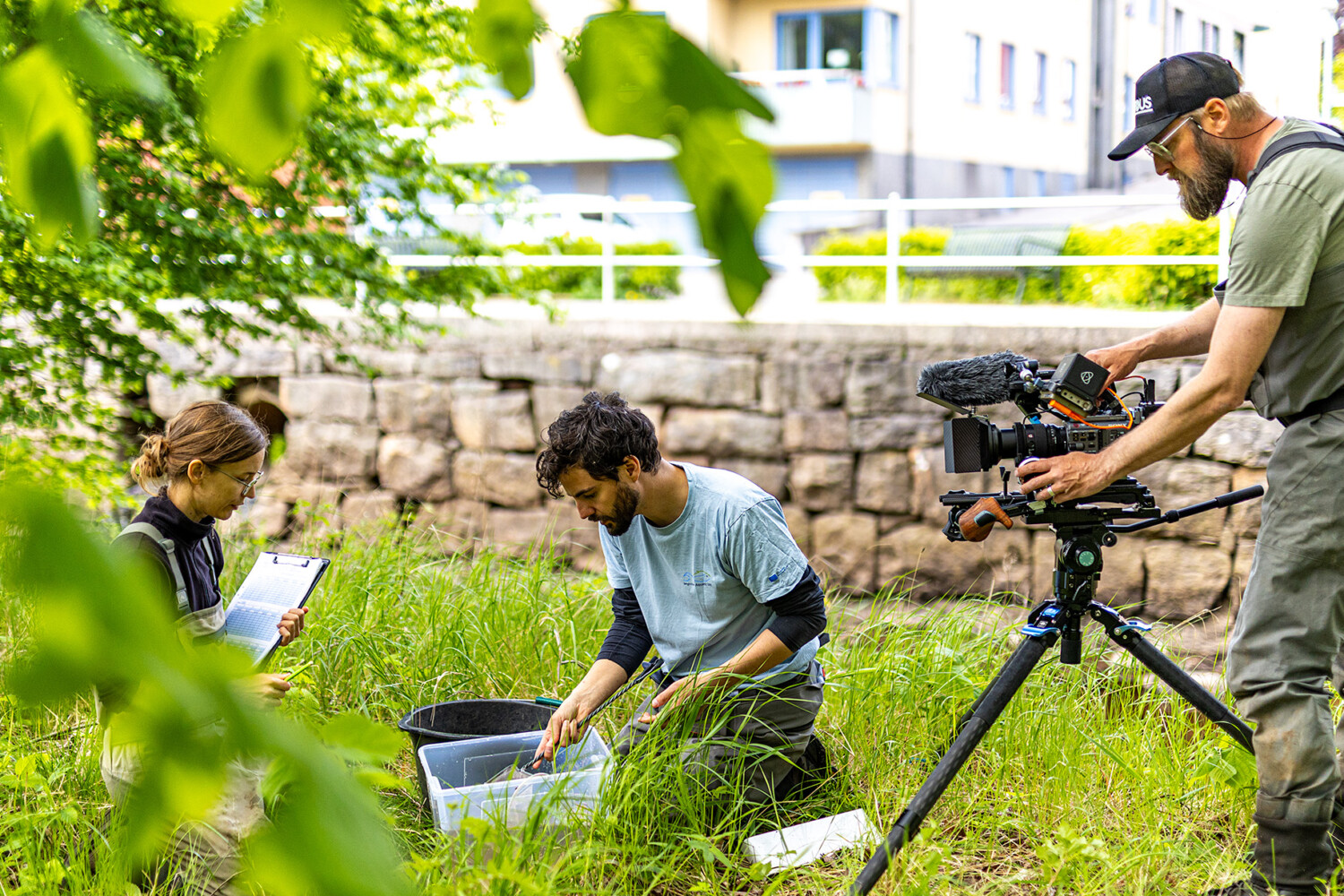
It has existed on Earth for more than 400 million years. But today, the sea lamprey is one of Sweden’s most endangered fish species. In this video segment, we tag along on surveys in the River Ätran. Here, we find out how this rare fish is faring—and whether the conditions still exist for the species to reproduce in the river.
In previous news reports, we’ve covered how biologists have used electrofishing to survey the riverbed of the River Ätran, primarily to locate sea lamprey larvae, which are buried in the sediment. Now you can watch a video clip where we dive below the surface and also chat with biologist Daniel Wendesten, who is conducting the survey.
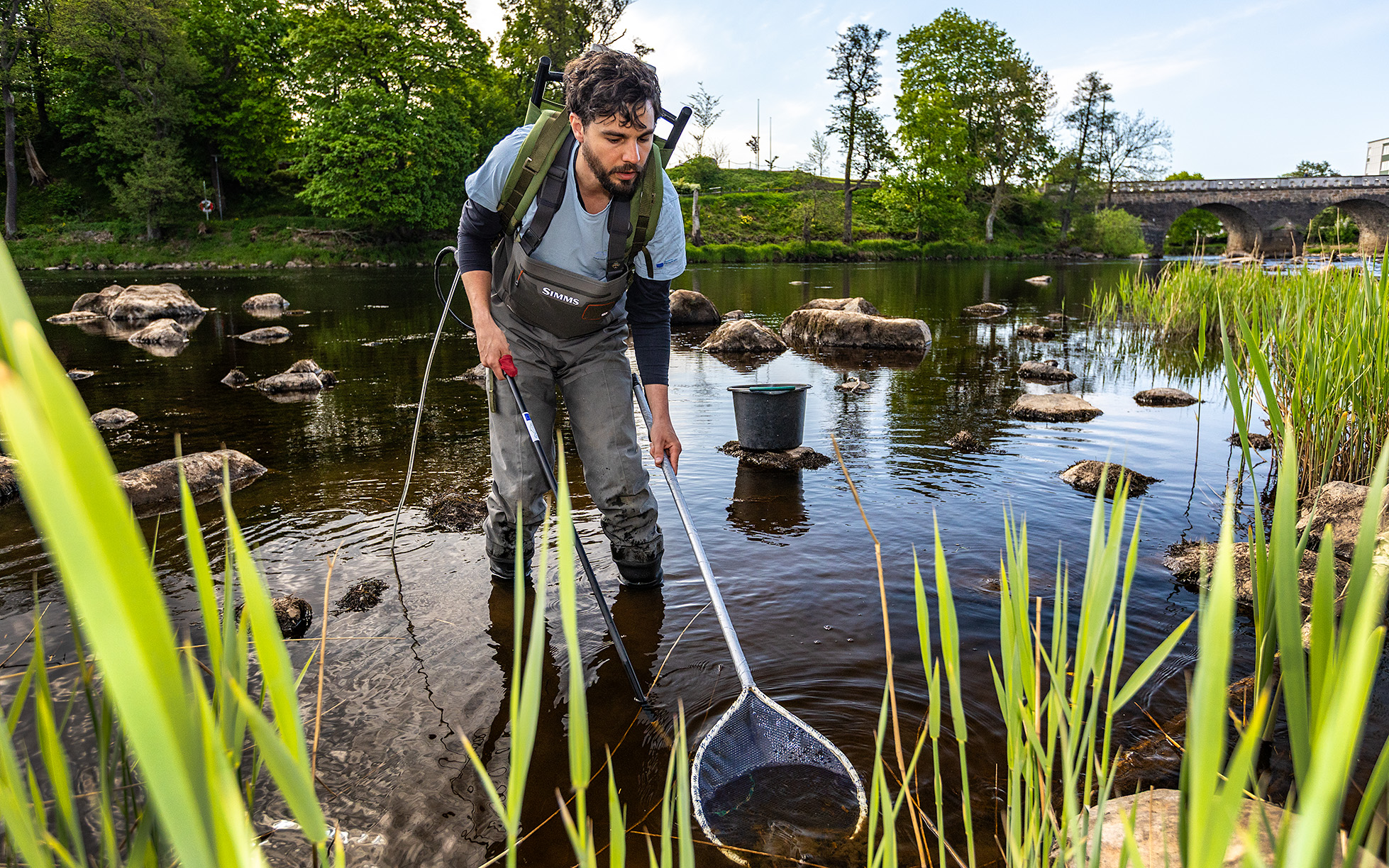
Using electrofishing, biologist Daniel Wendesten is surveying the lake bottom of River Ätran.
Photo: Nicka Hellenberg
“In most cases, electrofishing is done in flowing water to catch fish that move freely. The larvae of the sea lamprey, on the other hand, are buried in sediment banks, so the method has to be adapted accordingly,” says biologist Daniel Wendesten in the film.
Several different species were found
During the survey in Falkenberg, not only sea lampreys were found. River lampreys and brook lampreys were also caught, as were eels. The larvae of the different species are very similar to one another and can be difficult to tell apart.
The species has disappeared from many of the rivers where it was once found.
For the sea lamprey, the situation is particularly serious. The species has declined dramatically in Sweden. In the River Ätran, the population was estimated at around 1,500 individuals around 2010. Later surveys paint a completely different picture. In 2025, a total of 28 sea lampreys were recorded in the River Ätran, according to the Halland County Administrative Board.
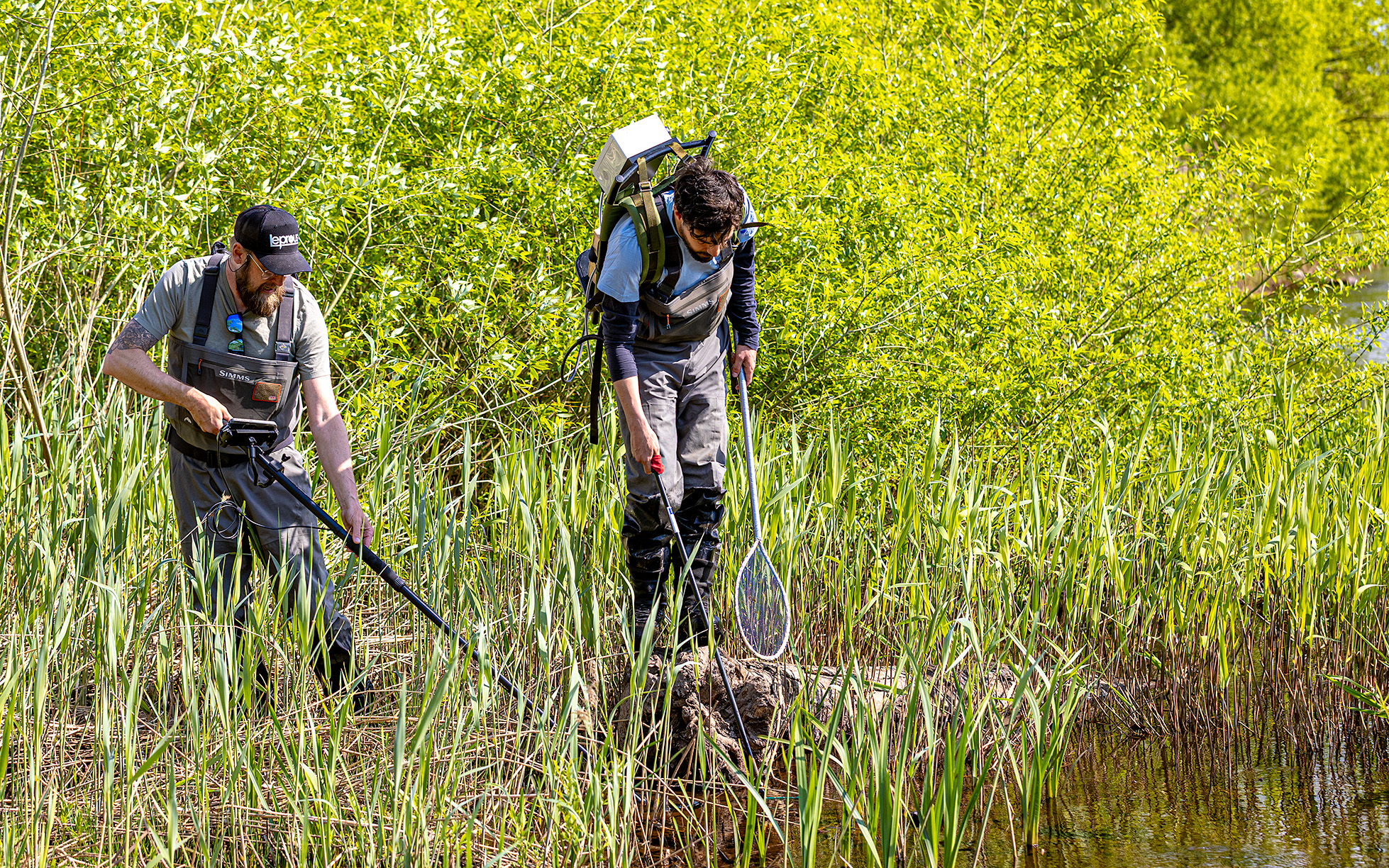
While Daniel Wendesten, a biologist with the Swedish Anglers Association, is electrofishing, Mathias Arnham films the mysterious life beneath the surface.
Photo: Nicka Hellenberg
Dependence on Large Fish
A significant portion of the sea lamprey’s life is spent in the ocean. There, adult individuals live as parasites on other fish. The availability of large fish is therefore crucial to the species’ survival.
At the same time, the sea lamprey needs functioning rivers in order to reproduce. When the fish migrates upstream from the sea, it seeks out suitable bottoms for spawning. The larvae then live buried in the sediment for several years.
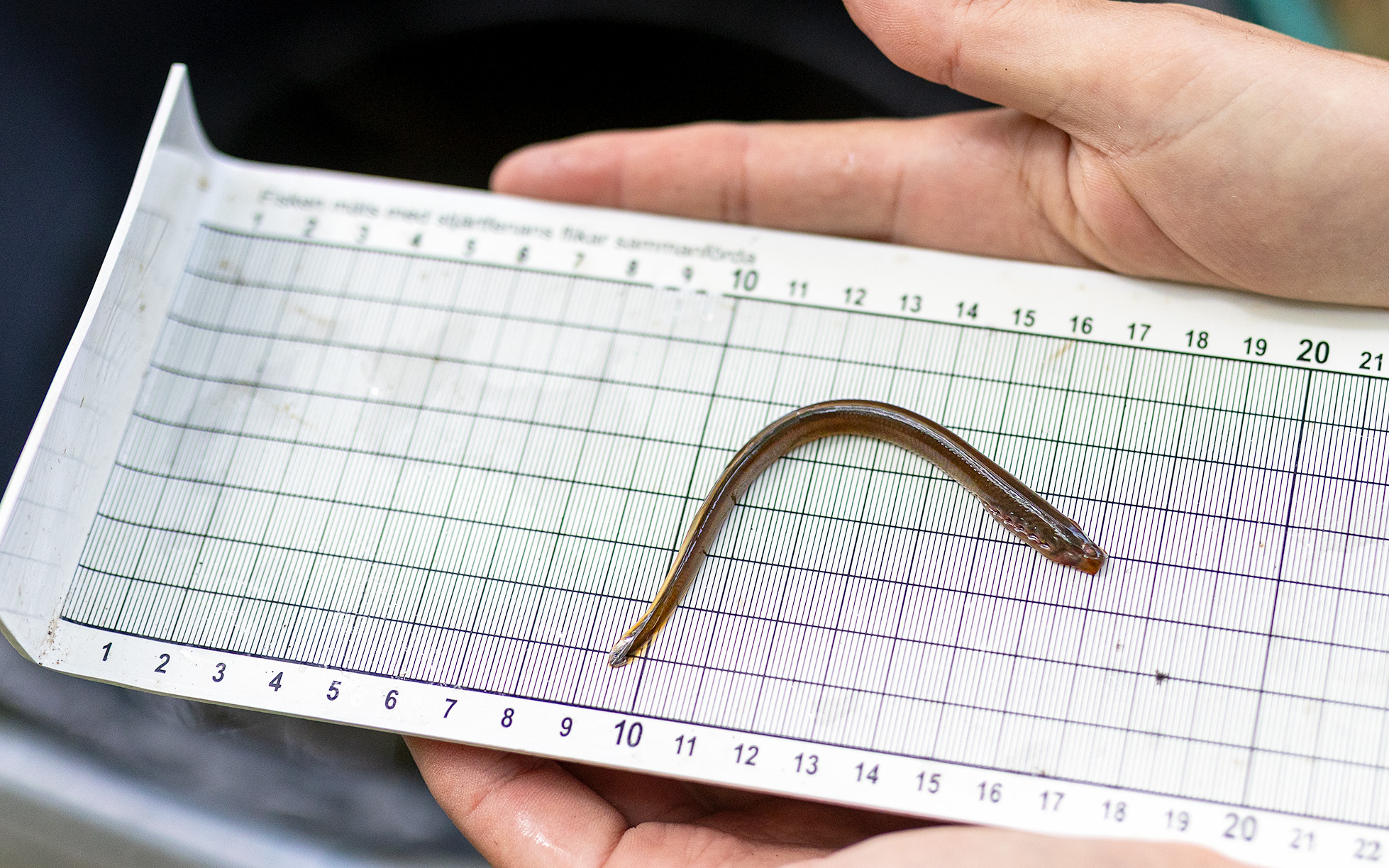
A sea lamprey larva is measured and recorded before being quickly released back into the water.
Photo: Nicka Hellenberg
Dams and other barriers to migration can prevent fish from reaching their spawning and nursery areas. Furthermore, regulating water flow can wash away the fine sediment that the larvae need.
The River Ätran has historically been an important river for the sea lamprey. However, the species has disappeared from many of the rivers where it was once found. The County Administrative Board notes that the sea lamprey has gone from being present in 20 rivers in Halland in 2015 to only three by 2024. In 2025, the species was recorded in four rivers in Halland.
In the video, a survey of the River Ätran sea lampreys is underway—right in the heart of Falkenberg.
Restoration Efforts Aim to Give the Species a Chance
Several initiatives are underway to improve the situation. In the River Ätran basin, efforts include the restoration of spawning and rearing grounds. Migration routes are being improved, and measures are being implemented to restore more natural aquatic environments.
The Improve Aquatic LIFE project is addressing several of the challenges faced by the sea lamprey. The goals include creating better habitats, improving connectivity in rivers, and restoring areas where fish and other aquatic species can grow up. These measures also benefit other threatened species such as salmon, eel, brown trout, and the Freshwater pearl mussel.
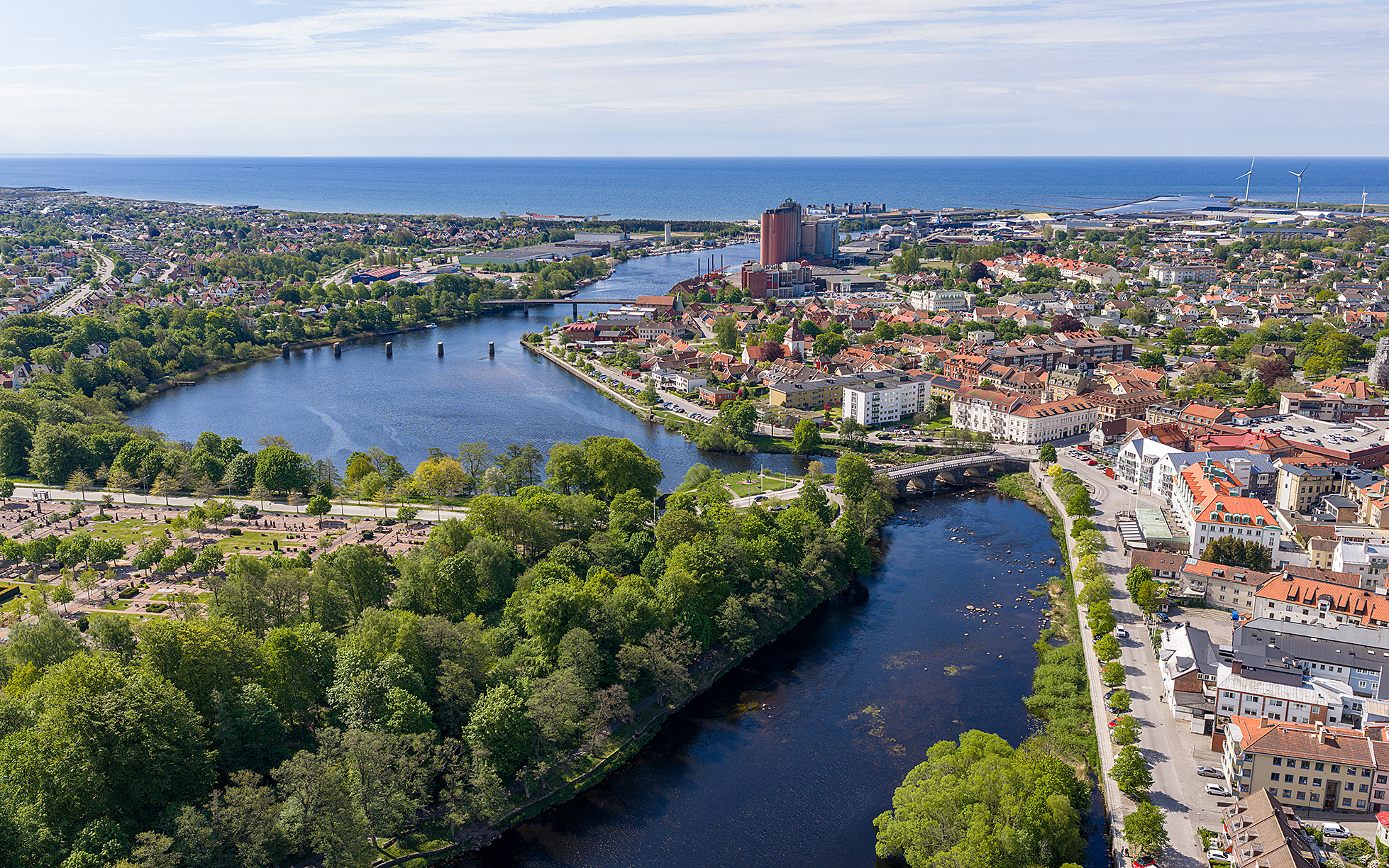
The River Ätran winds its way through Falkenberg. The sea lamprey is one of the species that calls this area home.
Photo: Mathias Arnham.
Every individual sea lamprey is important. When biologists find a larva, it is also a sign that the species is still successfully reproducing in the River Ätran. The surveys will continue to monitor the species and investigate where the larvae are located. Researchers and conservationists want clear answers as to whether the restoration of the River Ätran is yielding the desired results—so that this ancient fish can survive in Sweden’s waters in the future.