

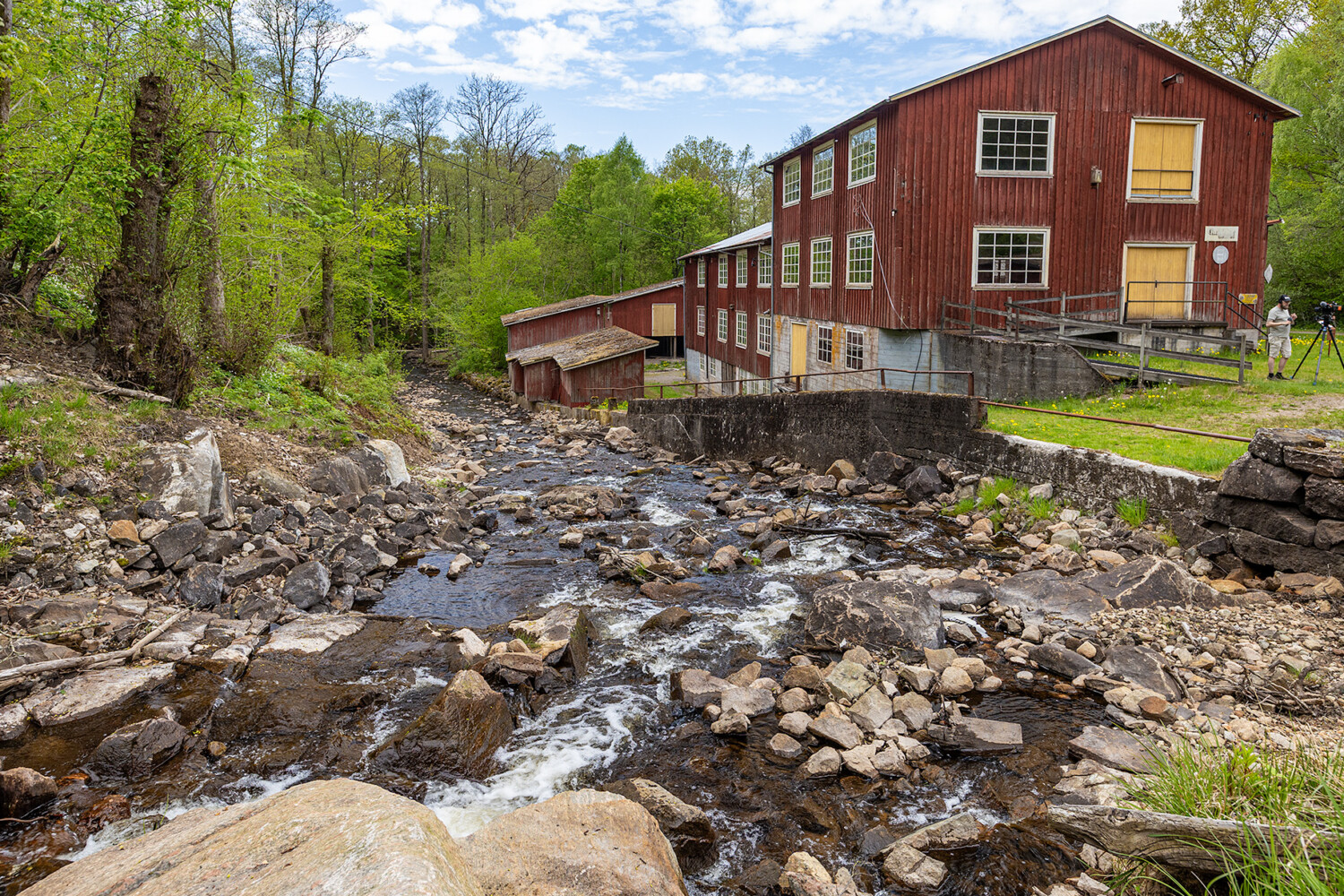
When the waterway was opened at Okome Mill in Stockån, fish were able to move freely upstream through the water system. Spawning salmon have been observed—and the restoration could have a major impact on the critically endangered sea lamprey, eel, and other species. Watch our video clip from our visit to the restored area.
The Stockån is a tributary of the Högvadsån and the River Ätran. For some time now, extensive work has been underway to restore the river’s aquatic environments. At Okome Mill, a dam has been removed, and the water can now flow freely.
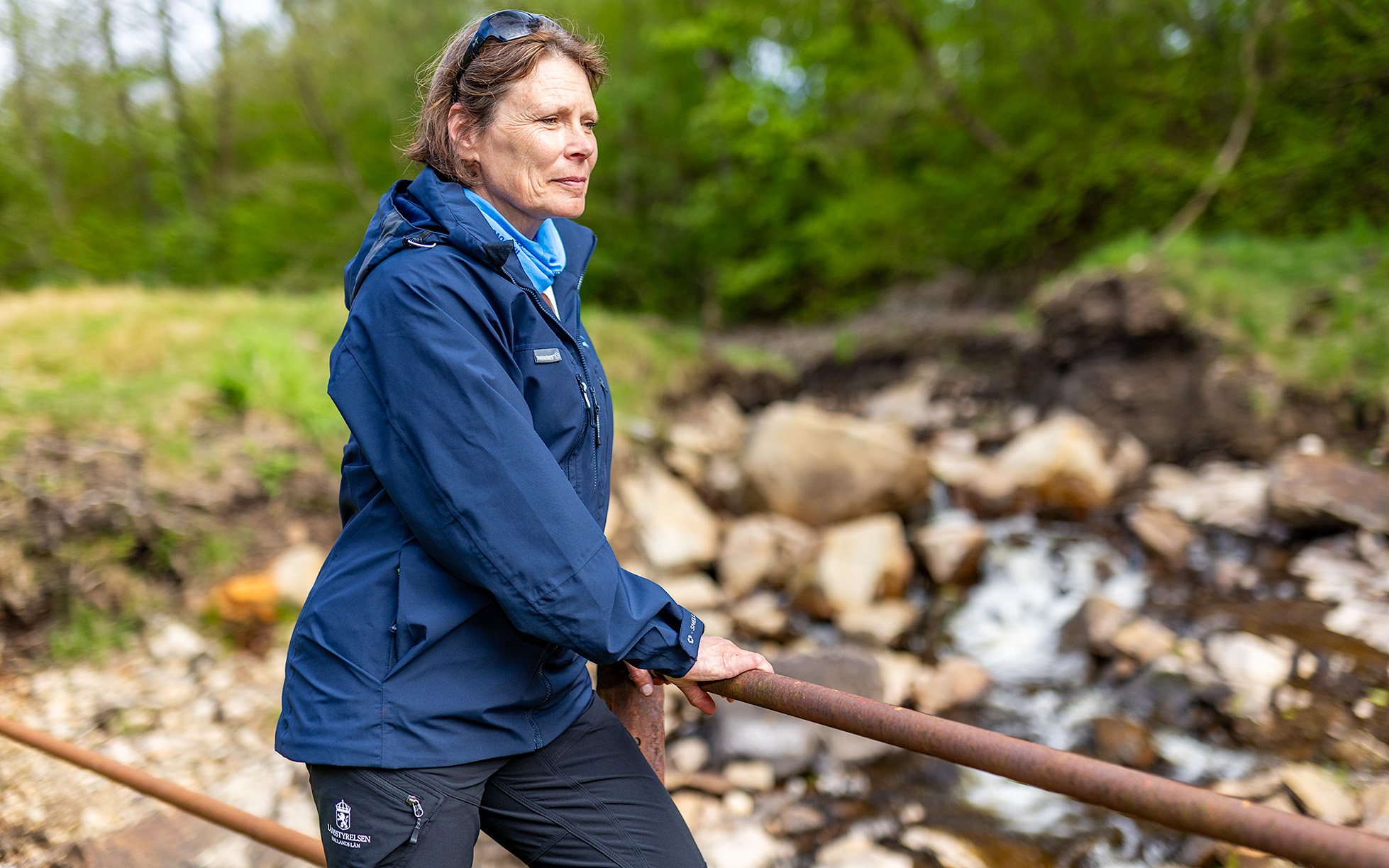
Elisabeth Thysell, a biologist at the Halland County Administrative Board, sees significant environmental benefits.
Photo: Nicka Hellenberg
“The open waterway allows several fish species to migrate upstream into the system. Among the species that benefit are salmon, eel, and the critically endangered sea lamprey,” says Elisabeth Thysell of the Halland County Administrative Board in the interview.
The results have come quickly. Spawning salmon were spotted almost immediately upstream of the former migration barrier. Elisabeth Thysell estimates that the salmon now have access to a total of one mil more rivers, where they can migrate freely and reach important spawning grounds.
The salmon can now migrate about one mil further upstream and reach their important spawning grounds.
Important Habitat for the Sea Lamprey(
) The sea lamprey is often referred to as Sweden’s most endangered fish species. The species has a complex life cycle and initially lives as a larva in sediment banks before undergoing a transformation and later living as a blood-sucking parasite in the ocean. After several years, it returns to rivers and streams to spawn.
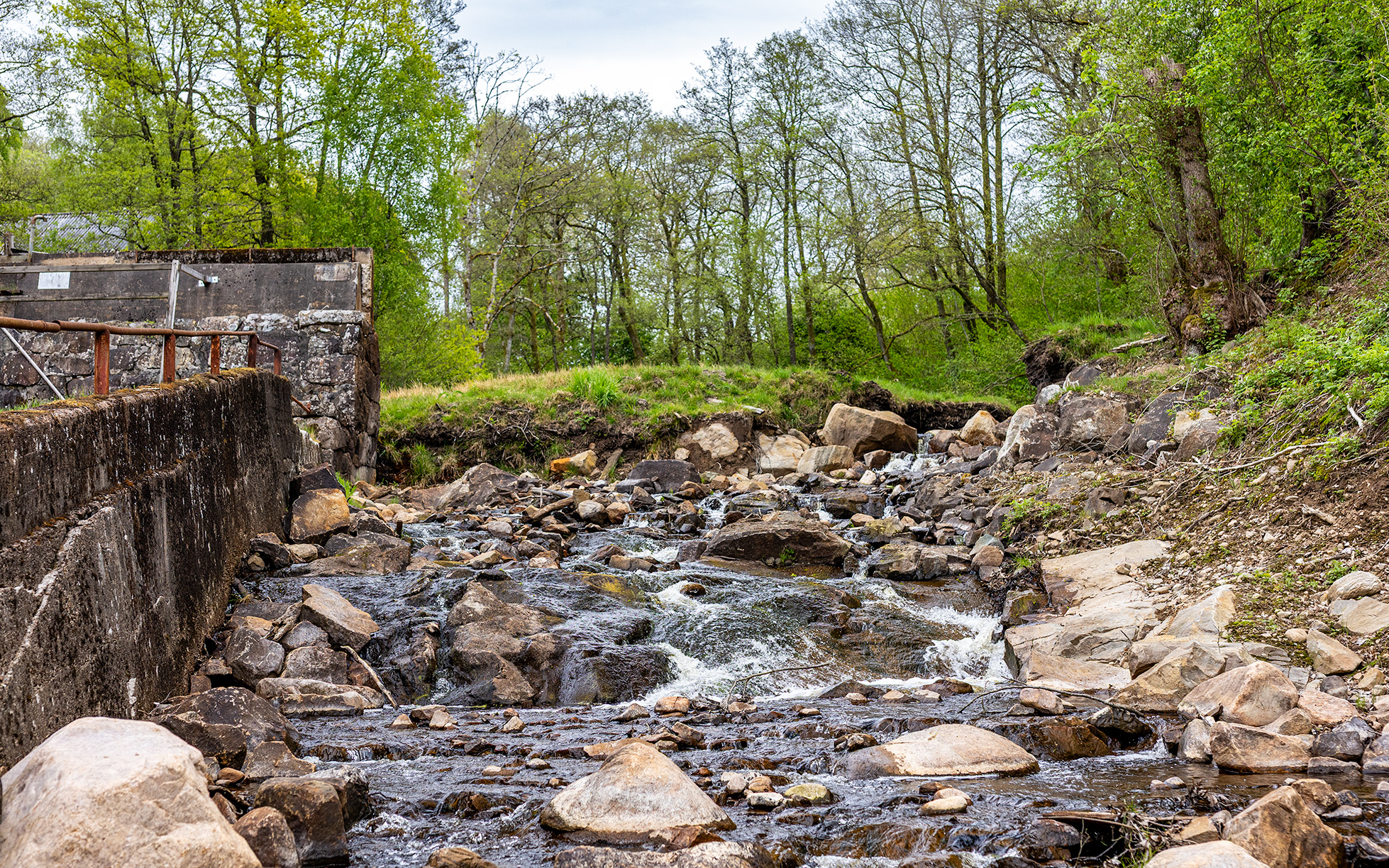
The former migration barrier is gone. Salmon, sea lampreys, and other species can now migrate freely.
Photo: Nicka Hellenberg
Today, the species is found only in a few rivers in Halland and Västra Götaland. As of 2025, it was estimated that there were fewer than 50 individuals in Sweden.
That is precisely why the restoration of the Okome Mill could be significant.
“With unobstructed migration routes and improved habitats, the species may be able to reach its upstream spawning grounds,” says Elisabeth Thysell, an expert on the sea lamprey and its biology.
Watch the news segment from Stockån in Halland. Biologist Elisabeth Thysell describes the value of the demolition of the Okome mill.
The work continues
Even though the major change has already been implemented, there is still work to be done. Stones, boulders, and dead wood will be returned to the river. At the same time, the idea is to let nature develop on its own as much as possible.
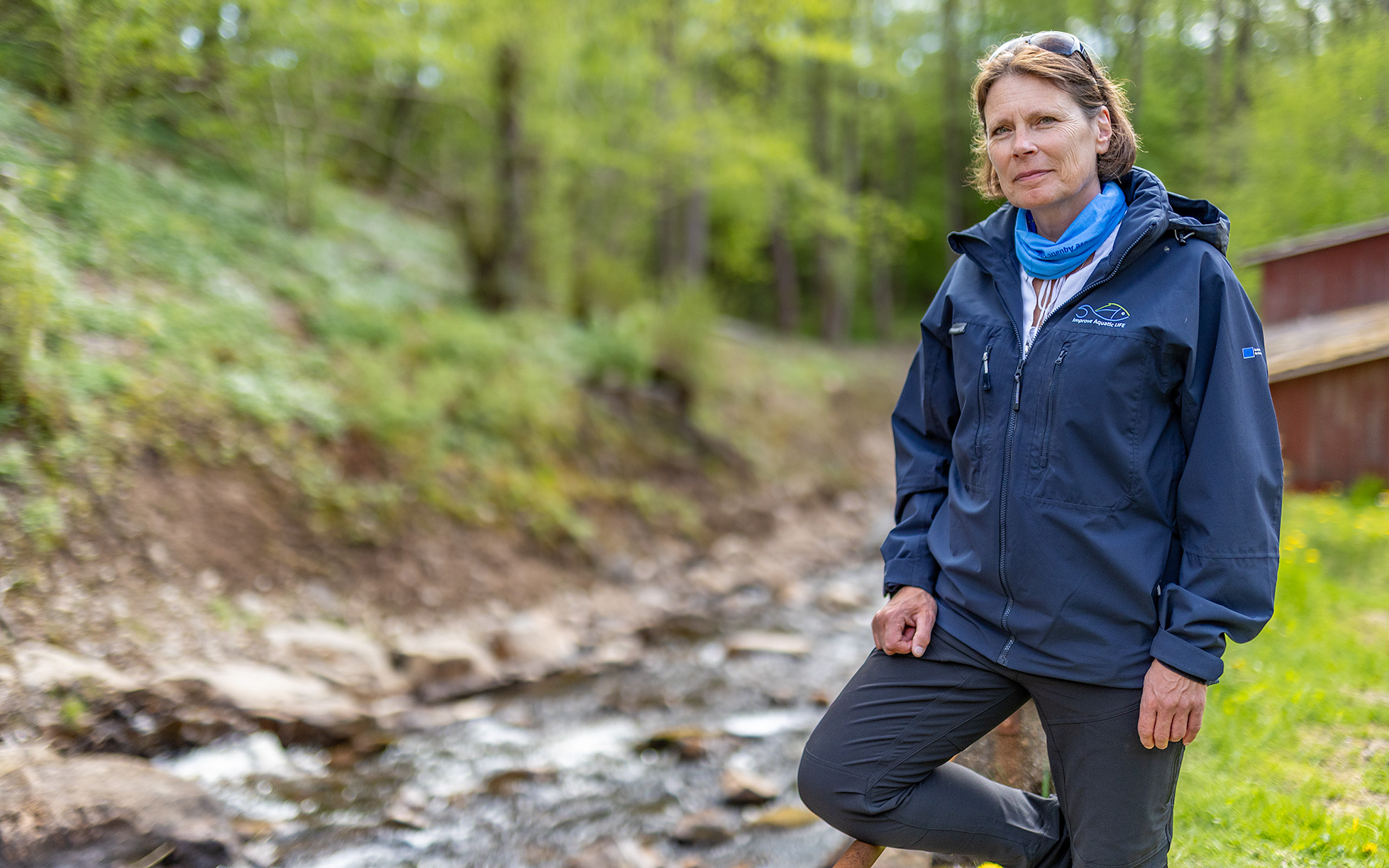
Elisabeth Thysell from the Halland County Administrative Board discusses the measures being taken in Stockån.
Photo: Nicka Hellenberg
To monitor developments, a fish camera has been installed in the river. Hopefully, the camera will provide a clearer picture of how salmon, sea lampreys, and other species use the restored waterway.
The river has now regained its original form, while part of the old dam embankment has been preserved as a cultural-historical reminder of the time when the dam was in use. In this way, the restoration has both restored the river’s important natural values and preserved part of the site’s history.