

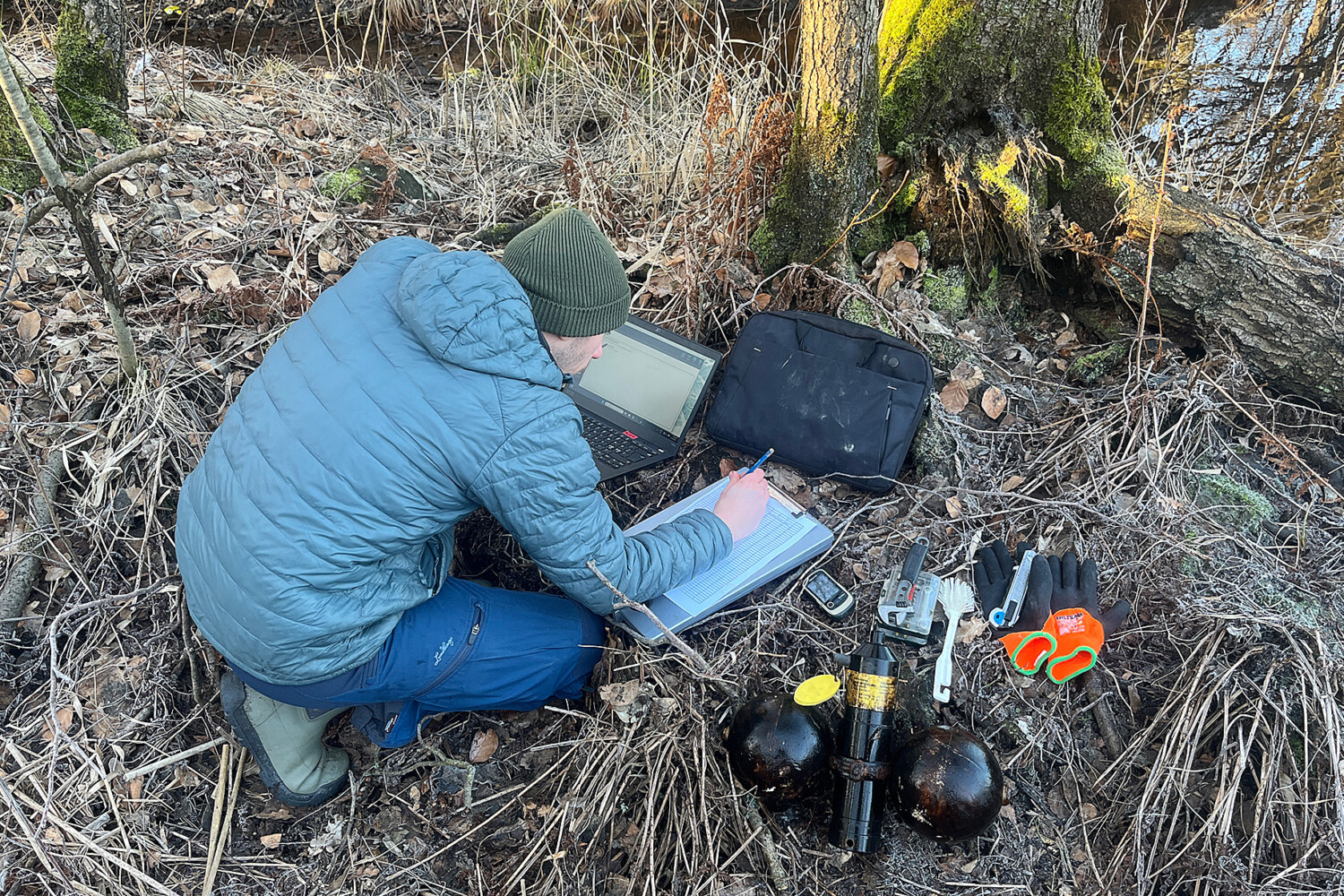
What happens below the surface is often a mystery. How do fish move through our rivers? Where do they stop – and why do some individuals disappear on their way to the sea? An exciting project in River Rönne å and Skälderviken is using acoustic telemetry to help researchers find answers to these questions.
Within Improve Aquatic LIFE, several measures are underway in River Rönne å and Skälderviken. Restoration is combined with research and monitoring. Universities and authorities, such as Karlstad University and SLU, are working together to monitor salmon migration, survival and how they use different habitats. By collecting and analyzing data, it is possible to study how the fish move through River Rönne å, how they use the coastal environments in Skälderviken and whether restored areas actually work as intended. This knowledge is crucial for understanding the effects of implemented measures, evaluating interventions such as stone reef restoration and improving future nature conservation.
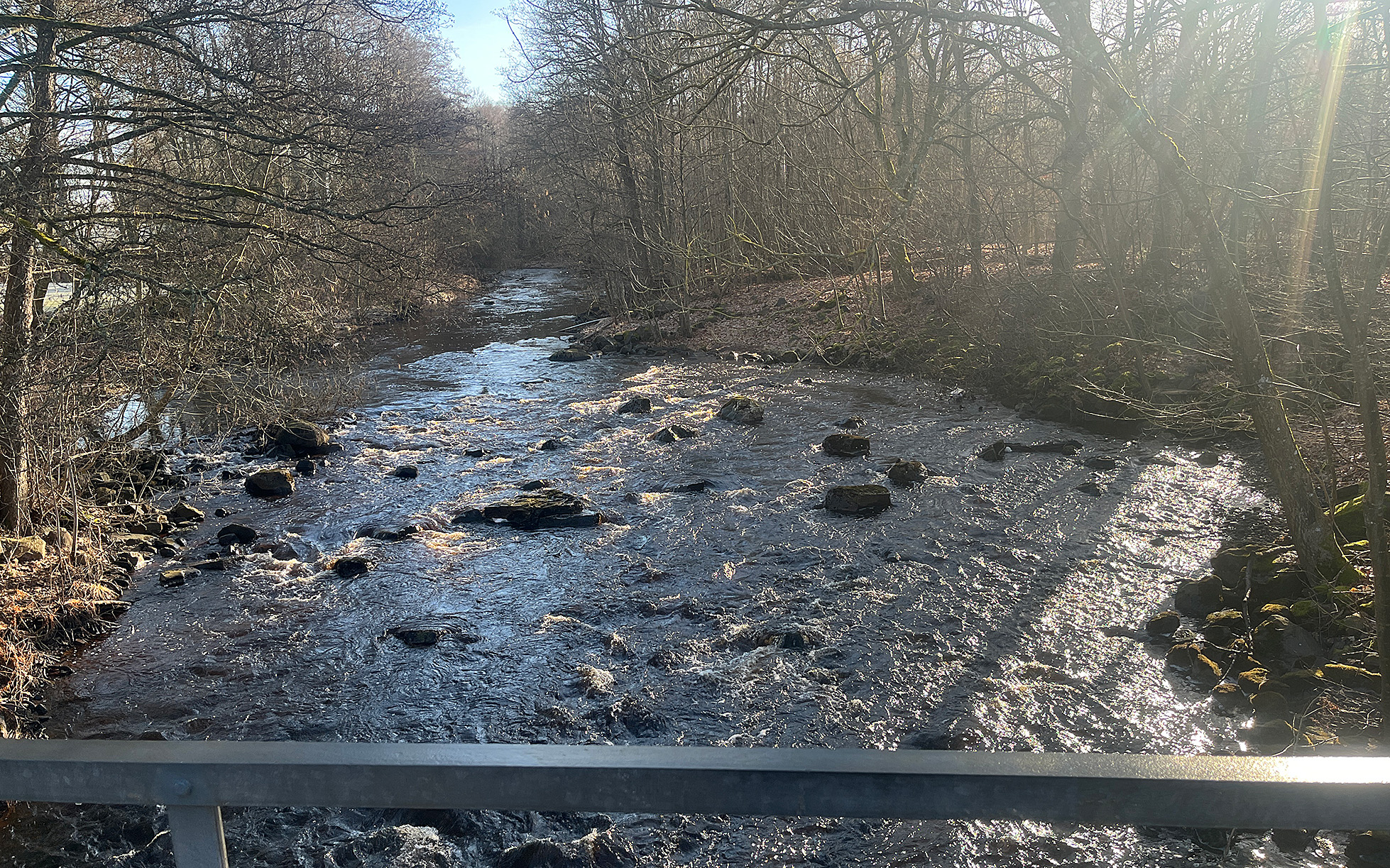
River Rönne å – where the telemetry study is conducted.
The salmon migration revealed
Every spring, thousands of salmon and sea trout smolts embark on their first major journey from freshwater to sea. But the journey is risky, and many never make it. A study is now underway to find out how many actually survive – and why.
Researchers Samuel Shry and Mattias Hansson at Karlstad University are responsible for the project, which is looking at how long the migration takes and whether there are particular stretches where smolts are at greater risk of dying. These may include areas where fish are delayed, which in turn may increase the risk of predation or other threats.
By measuring how the smolts move through the area already now, researchers will be able to determine in the future whether the restoration affects how the fish use the habitat.
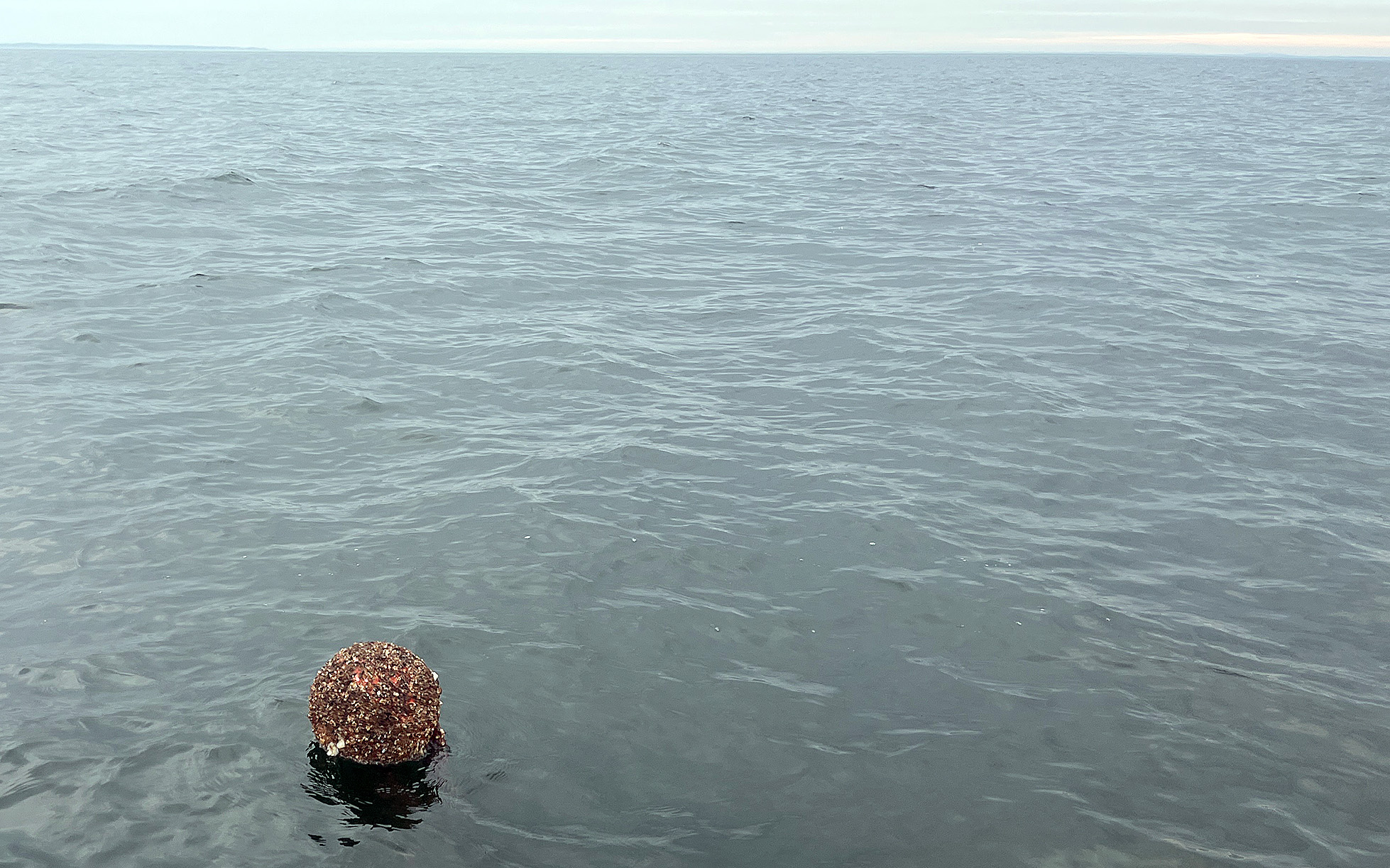
Out in Skälderviken there are receivers used to detect fish in several research projects. The receivers are part of a collaboration between Karlstad University and SLU.
Recording the movements of smolts
Acoustic telemetry – transmitters that emit acoustic signals – is used to follow the movement patterns of fish. When smolts pass special receivers in River Rönne å and Skälderviken, their movements are recorded, making it possible to map their path towards the sea and later in the ocean. In connection with the tagging, an estimate is also made of how many smolts are produced in the river. This is done through a method called ‘catch and release’. First, the fish are caught and tagged with so-called PIT-tags – small passive chips, similar to those used to tag pets, then released back upstream. By later counting how many tagged individuals are recaptured, the researchers can calculate the total population.
– The study builds on an earlier study by Karlstad University led by Samuel Shry. There, adult salmon and sea trout in River Rönne å were tagged and their spawning migration and habitat use in both River Rönne å and Skälderviken were investigated. The current smolt study will complement the previous study with important information on smolt migration and survival, explains Mattias Hansson.
Restored Stone reefs and their importance
An important tool in the project is a network of receivers in Skälderviken. The receivers in Skälderviken are used by several research initiatives, which means that other species, such as cod and even tuna, sometimes appear in the data collection.
In the wider area, the researchers have focused on selected sites, such as an area where a Stone reef is planned to be restored. By measuring how the smolts move through the area already now, researchers will be able to determine in the future whether the restoration affects how the fish use the habitat
– The results from the acoustic telemetry combined with the production estimate provide a clearer picture of the proportion of smolts that actually reach the sea. By identifying risks and potential bottlenecks during the migration to the sea, the management of the salmon population can be strengthened through adaptive management, Hansson and Shry say.
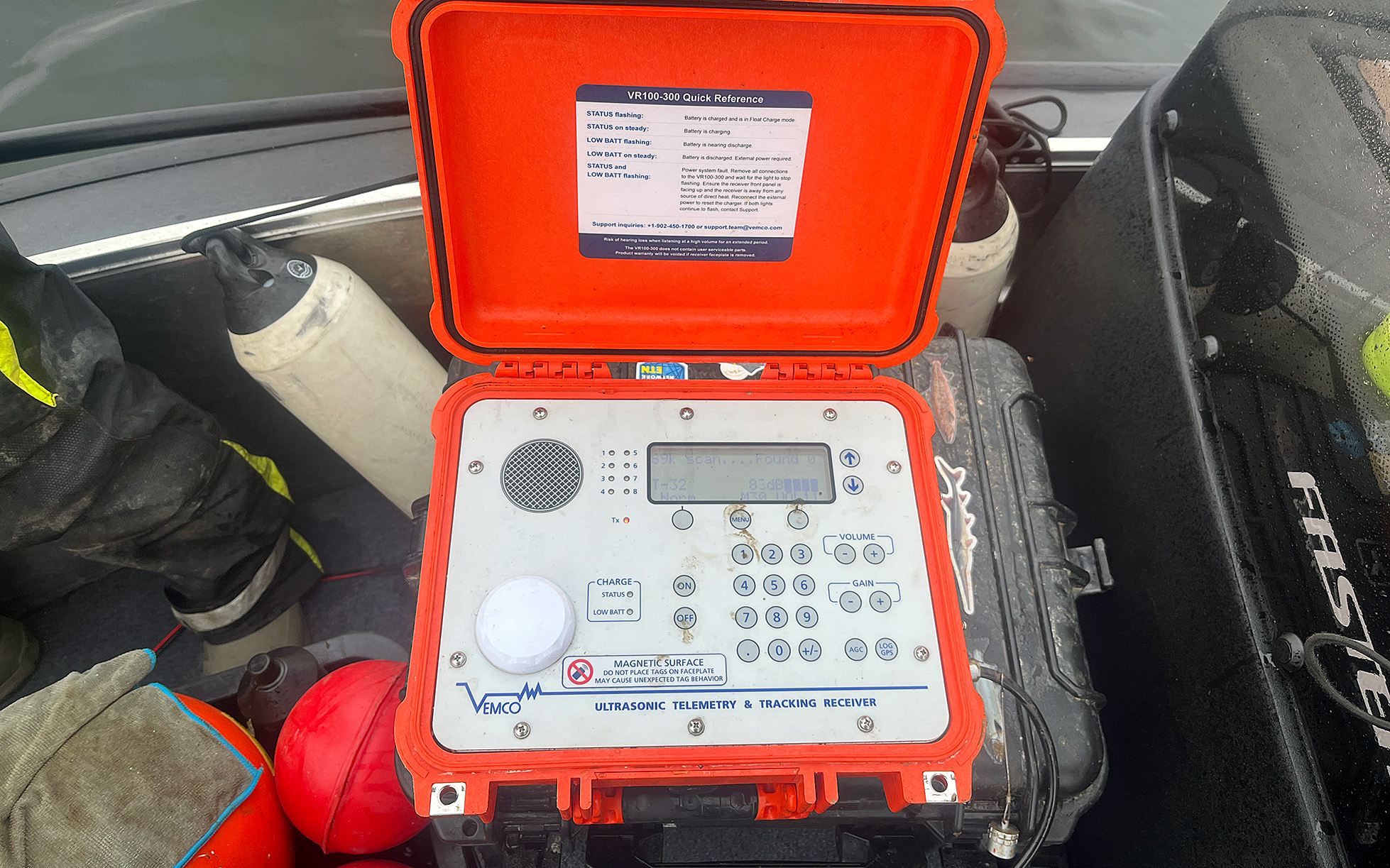
Acoustic telemetry is a method of tracking fish in the sea, lake or river.
Time-consuming work
The work is characterized by both practical and unpredictable challenges. Catching the fish to be tagged is time-consuming, and data collection depends on finding the recipients later. Sometimes they get lost in high flows or buried in sediments, leading to rescue operations to save equipment and data.
– The receivers also need to stay in the water to work. Sometimes they come up when fishermen land their catch. Many put them back, but when the receivers are left on land, data collection stops. That’s why all equipment is labeled with contact information, and we are grateful for each recovered receiver,” conclude Mattias Hansson and Samuel Shry.