

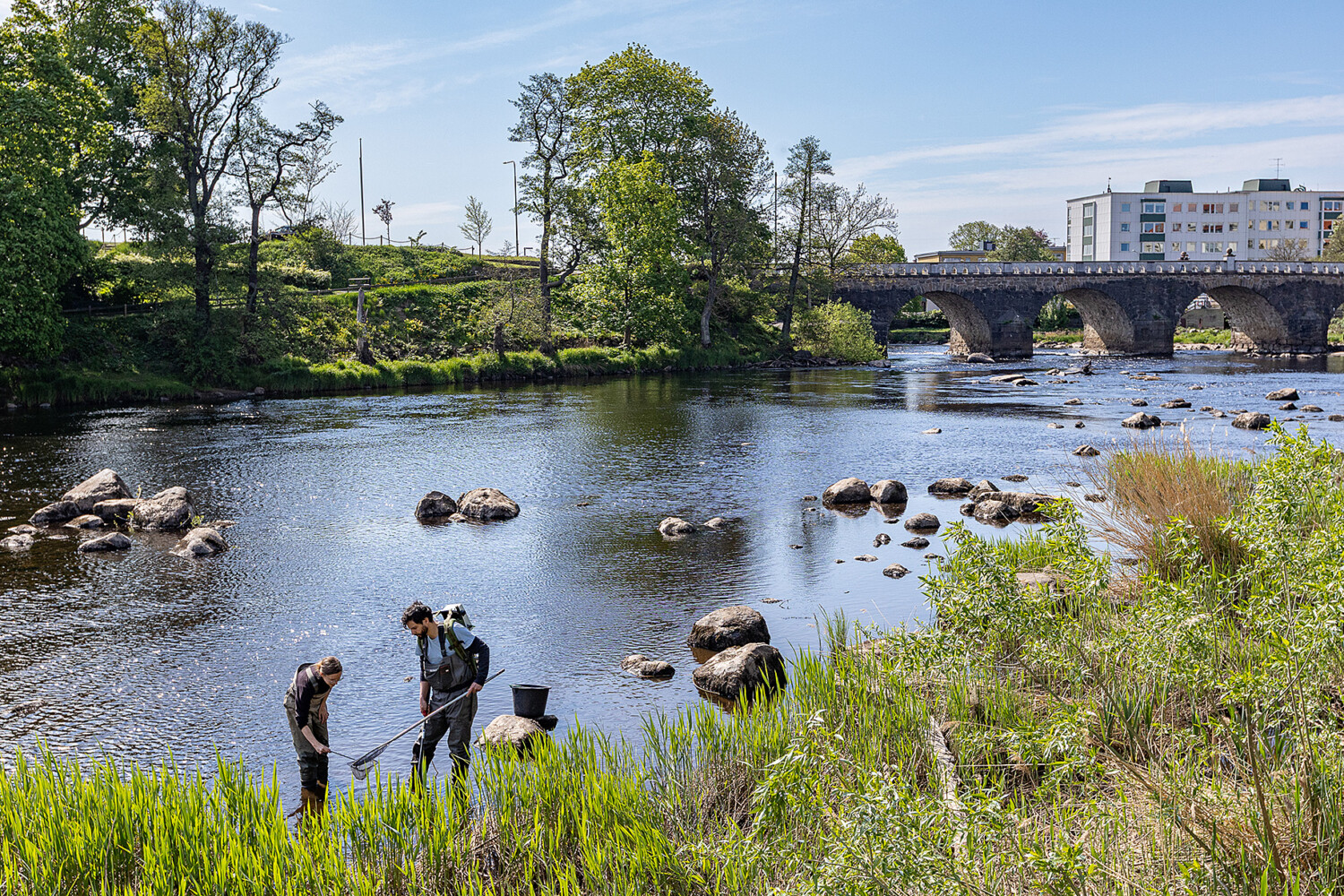
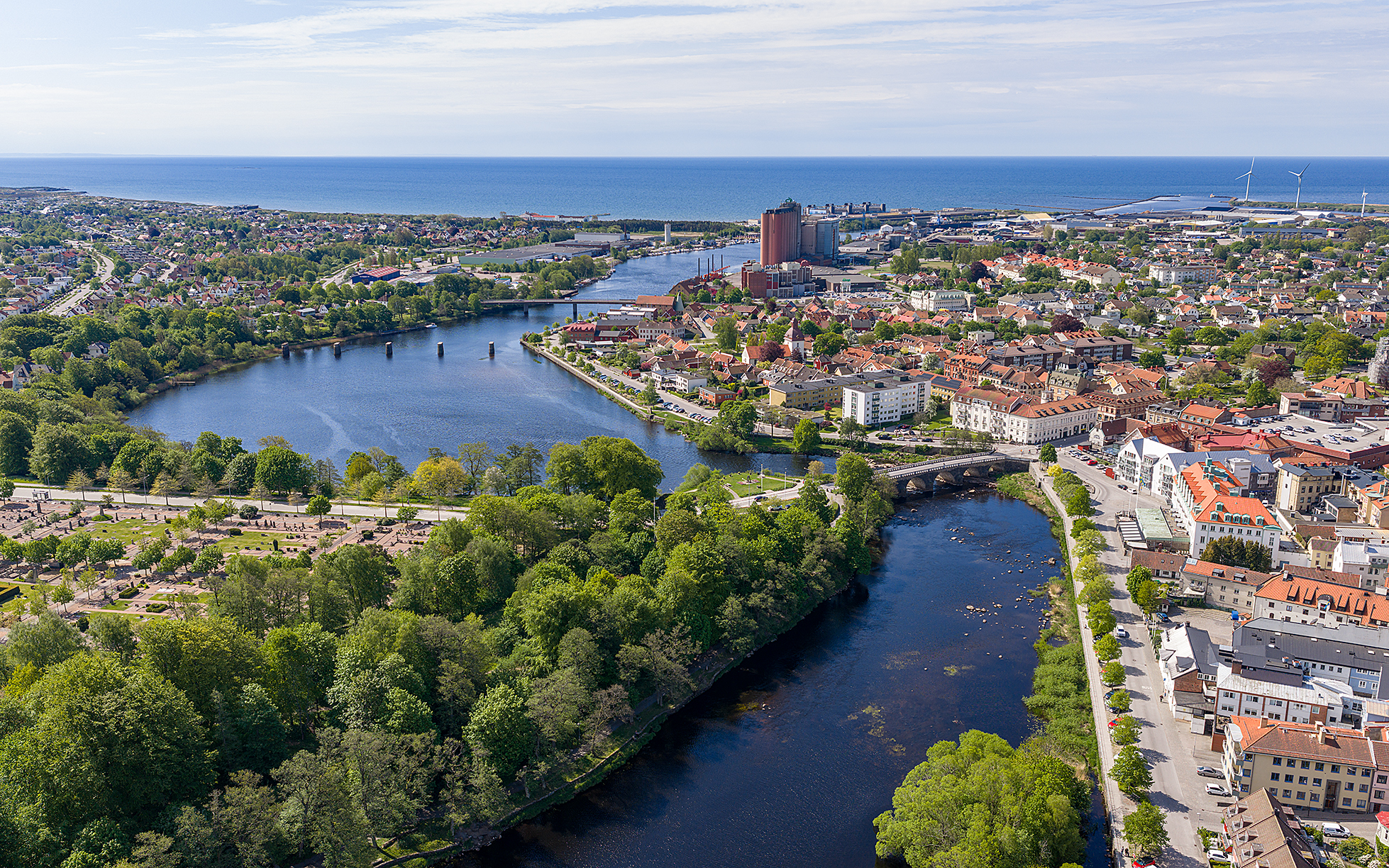
The River Ätran winds through Falkenberg before it flows into the Kattegat. Photo: Mathias Arnham
The sea lamprey is one of the country’s most threatened fish species and is a target species within Improve Aquatic LIFE. The River Ätran has long been one of Sweden’s most important rivers for the species. The sea lamprey lives much of its life in the sea but migrates up rivers like River Ätran to spawn. The larvae then spend several years burrowed in the river’s soft sediments before migrating to the sea.
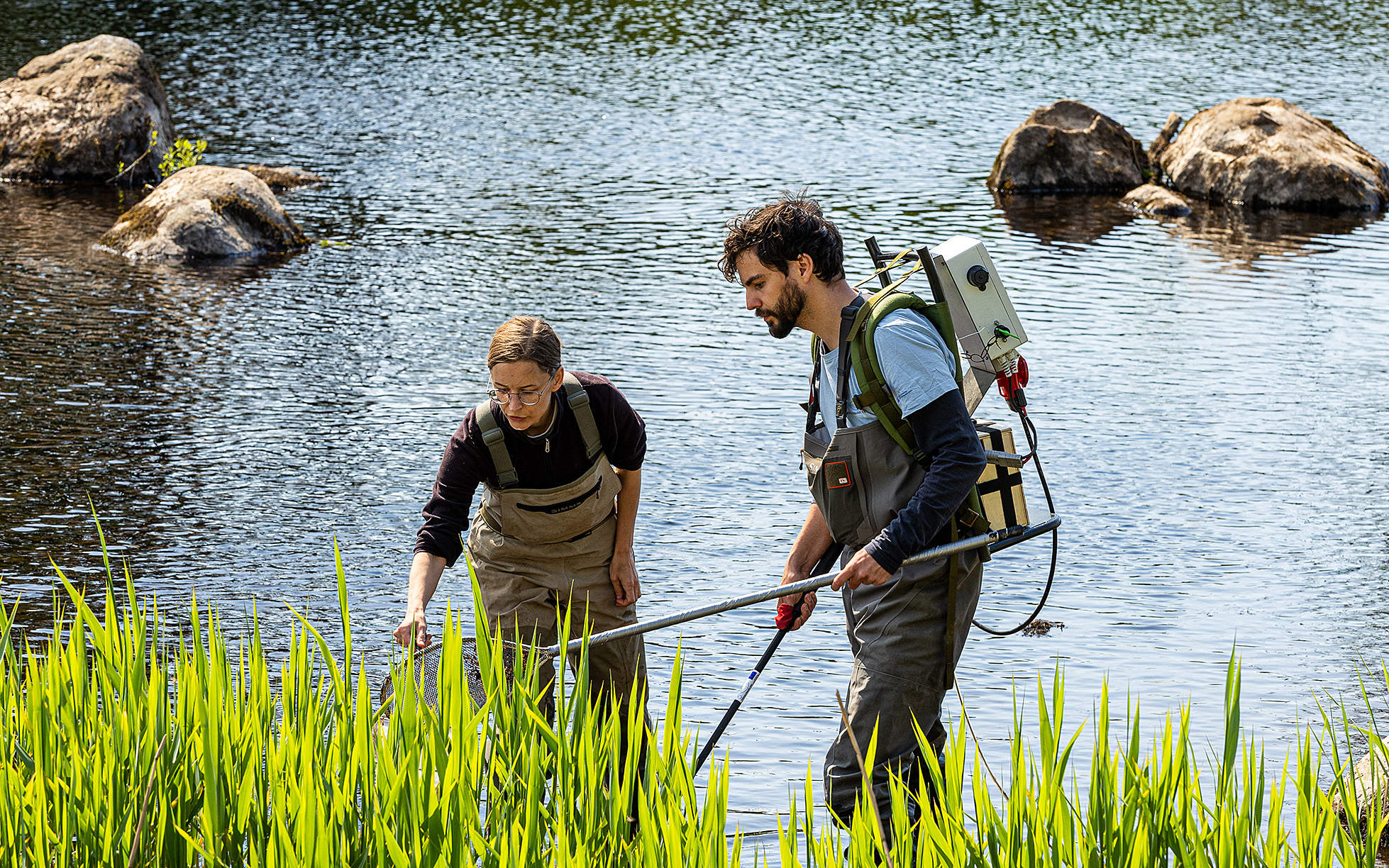
Swedish Anglers Association biologists Daniel Wendesten and Malin Kjellin electrofishing.
Photo: Nicka Hellenberg
A major reason for the decline is hydropower and migration barriers that make it difficult for sea lamprey to reach their spawning grounds. In addition, many fishways are built for salmon and trout and do not work well for the sea lamprey, which is a weaker swimmer and cannot jump. The species is also affected by cleared riverbeds, poor water quality and the decline of large fish in the sea – which it feeds on during its marine phase.
Sea lampreys in the River Ätran are located
In 2009-2010, the number of sea lampreys in the River Ätran was estimated to be at least 1,500 individuals, but the population has declined dramatically. In the 2025 survey, only 28 individuals were recorded in the entire River Ätran, showing how acute the situation is.
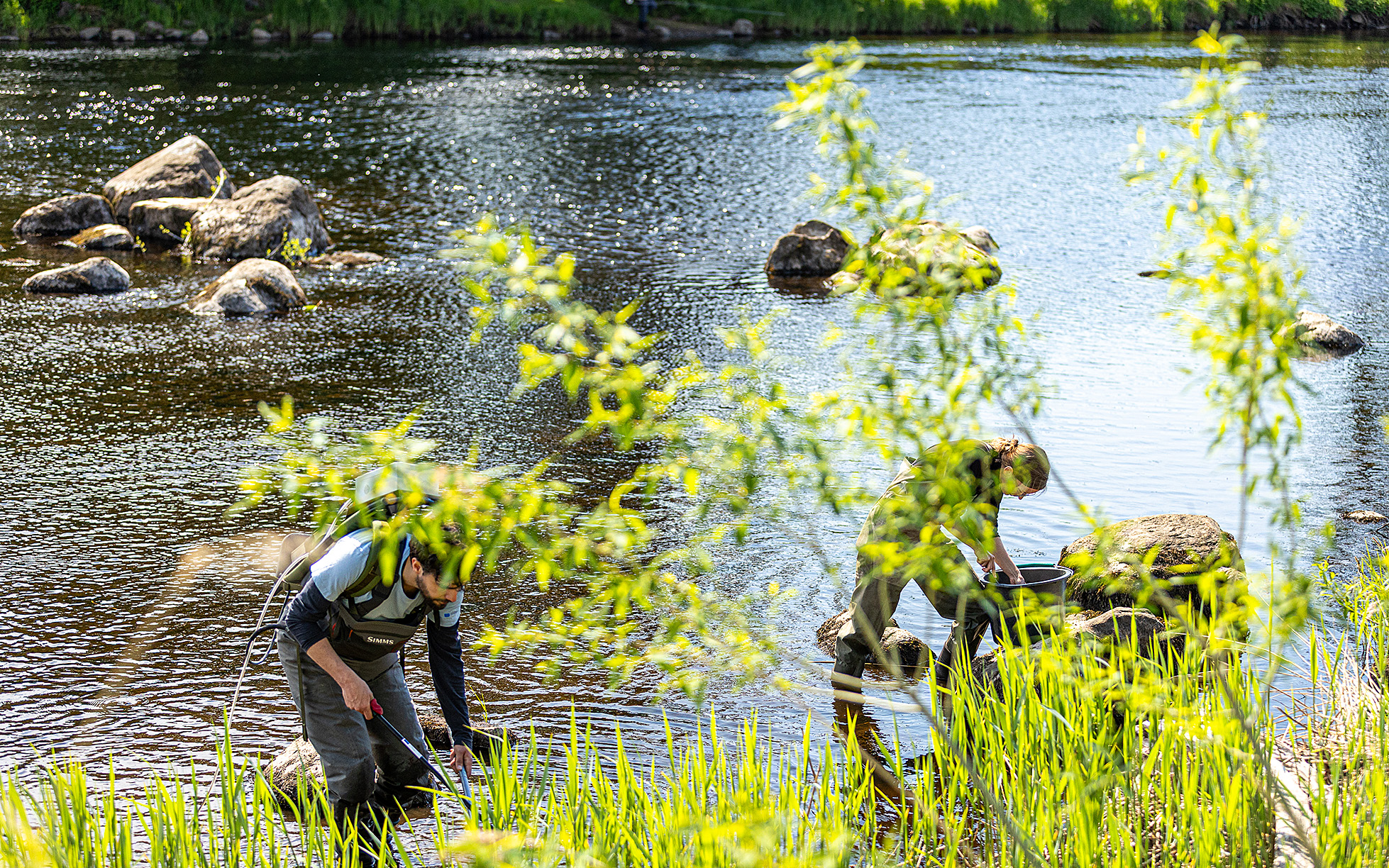
Electrofishing for sea lamprey larvae takes place on the shallow sediment banks. Photo: Nicka Hellenberg
But several restoration efforts are underway in the River Ätran – both within Improve Aquatic LIFE and in other nature conservation projects. These include improving free migration routes, restoring spawning beds and creating better environments for both larval and adult sea lamprey. Species such as salmon, trout, eel and Freshwater pearl mussel also benefit from the measures.
Findings in Falkenberg city center
In central Falkenberg, Swedish Anglers Association biologists Daniel Wendesten and Malin Kjellin have been electrofishing, to inventory sea lampreys and gain knowledge about the number of individuals in the River Ätran, but also to help develop methods for studying the species.
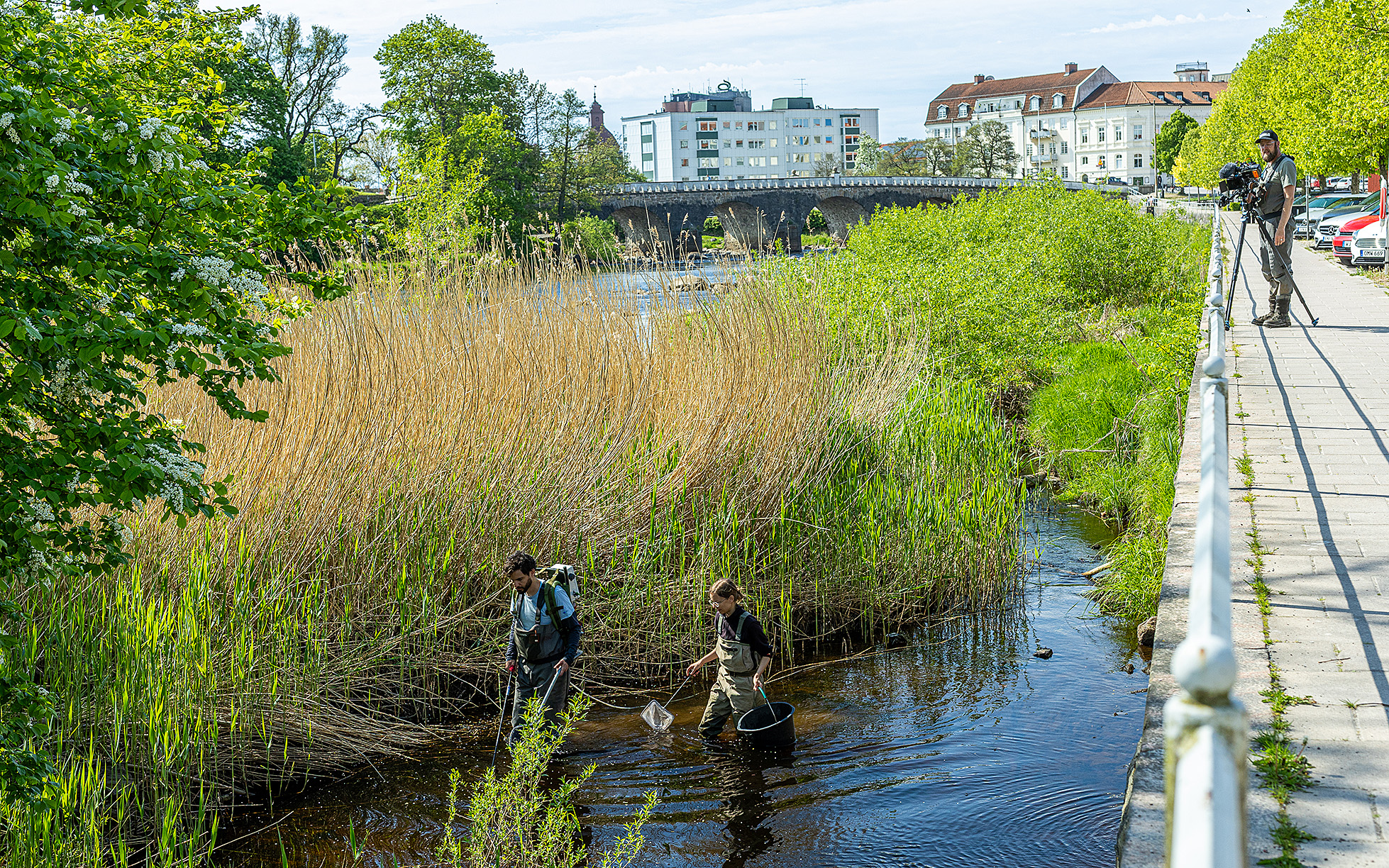
Inventory of sea lamprey, in the middle of Falkenberg. Photo: Nicka Hellenberg
– “In most cases, you electrofish in flowing water and catch fish moving freely in the water, but sea lamprey larvae are buried in sediment banks in calm flowing areas, so here you have to adapt the method and get the larvae to leave the sediment so that you can catch them,” explains Daniel.
On this day, Daniel and Malin were pleased to find a sea lamprey larva in the River Ätran. A number of river lamprey and brook lamprey larvae were also caught, as well as eel fry and juvenile tench.
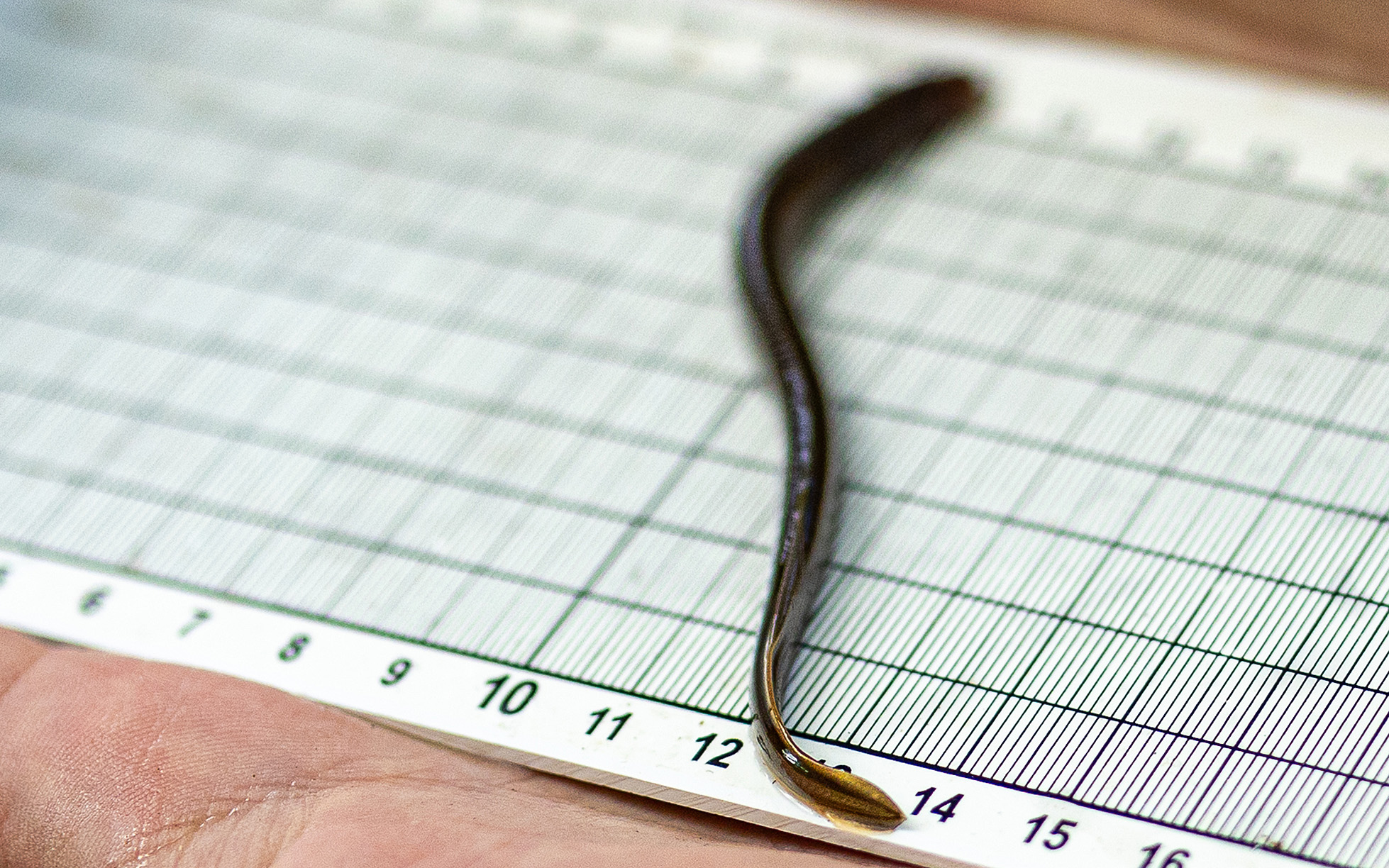
The different sea lamprey larvae can be difficult to distinguish. The tail of this larva reveals the species: sea lamprey! Photo: Nicka Hellenberg
Improve Aquatic LIFE measures in River Ätran
The headwaters of River Ätran are in Västergötland, but mainly this west coast river flows through Halland and empties into the Kattegat. The last part of the River Ätran meanders through central Falkenberg. During the 1970s, the River Ätran was severely affected by acidification, which nearly wiped out its wild salmon population. Extensive liming helped the ecosystem recover and the salmon returned. However, migration barriers and the lack of spawning grounds have affected salmon and many other species.
Under Improve Aquatic LIFE, several measures are being implemented in the River Ätran and its tributaries to enhance biodiversity, restore natural aquatic habitats, remove or rebuild migration barriers and restore spawning and nursery areas for fish and mussels.