

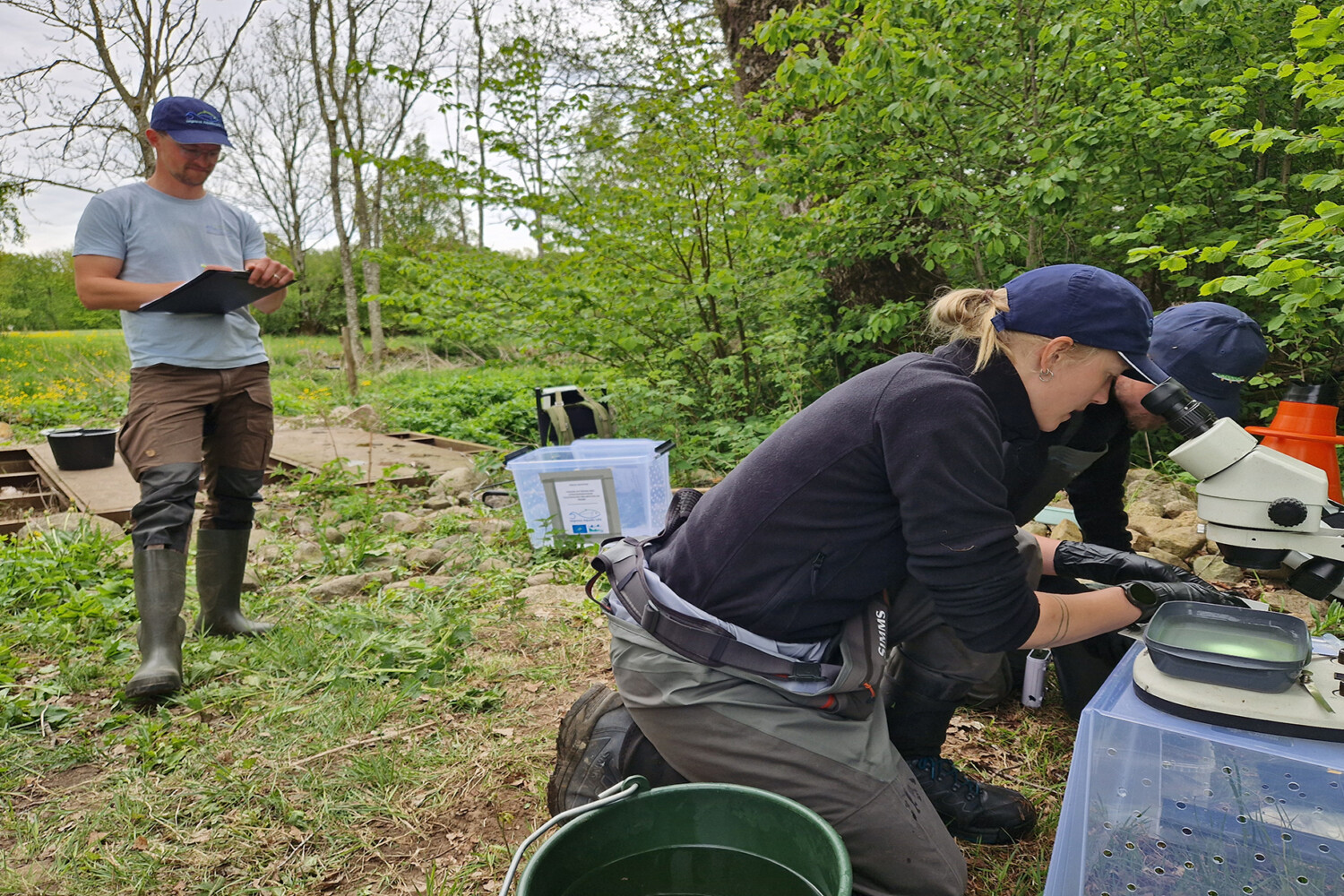
In May, efforts to strengthen the populations of the threatened Thick shelled river mussel were launched. Through targeted measures in Vramsån, Bråån, River Bräkneån and River Mieån, the work has focused on facilitating the mussel’s natural reproduction – a method that can help strengthen and rejuvenate the populations.
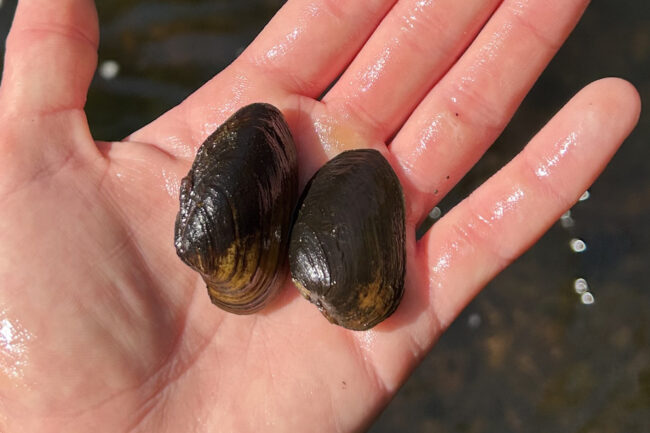
Two Thick shelled river mussels
Endangered mussels with a complex life cycle
The Thick shelled river mussel, one of the Improve Aquatic LIFE target species, is threatened both in Sweden and internationally due to factors such as acidification, eutrophication and physical impacts on its habitat. In May, we started work to strengthen the populations of the threatened mussel. We do this by helping the glochidia larvae of the pregnant mussels to infest their host fish.
Like the Freshwater pearl mussel, the Thick shelled river mussel feeds by filtering water and has a complex life cycle. They begin their life as parasitic larvae, known as glochidia, and attach themselves to the gills of host fish, where they obtain energy and nutrition from the fish and develop into small mussels. The Thick shelled river mussel has several possible host fish, including Eurasian minnows, bull heads and common bleak. This parasitic phase lasts for about a month, after which the small mussels release their gills and live for several years buried in sediment before becoming large adult mussels.
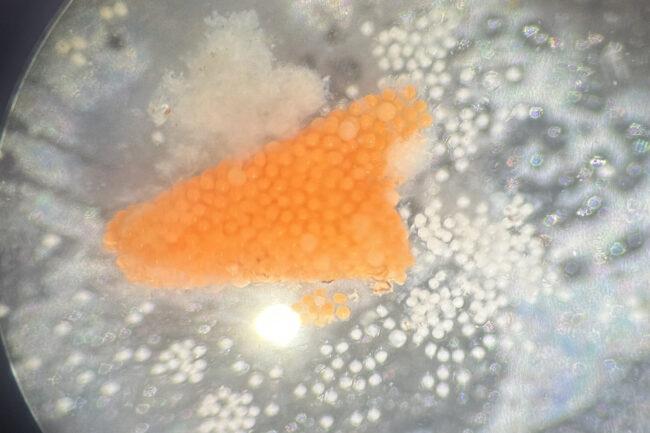
The glochidia larvae are visible through the steroscope. These larvae are not fully developed yet and not ready to infest their host fish.
– Conservation efforts for the Thick shelled river mussel are important partly because they are ecosystem engineers. They filter and ‘clean’ the water, stabilize the sediment and create microhabitats for insects and small fish, for example,” says Emilia Nordfeldt, a doctoral student in the project who is researching the conservation and genetics of freshwater mussels.
As the species is threatened and protected under the EU Species and Habitats Directives, measures are needed to strengthen the stocks. To strengthen regeneration and stocks, we are carrying out artificial infestations of glochidia on the host fish. First, we have been looking for adult gravid mussels carrying glochidia larvae. In mid-May, we found eleven pregnant mussels in Vramsån (Skåne), which were placed in fish tanks together with about thirty fish. In Bråån (Skåne) we found seventeen pregnant mussels and did the same with them.
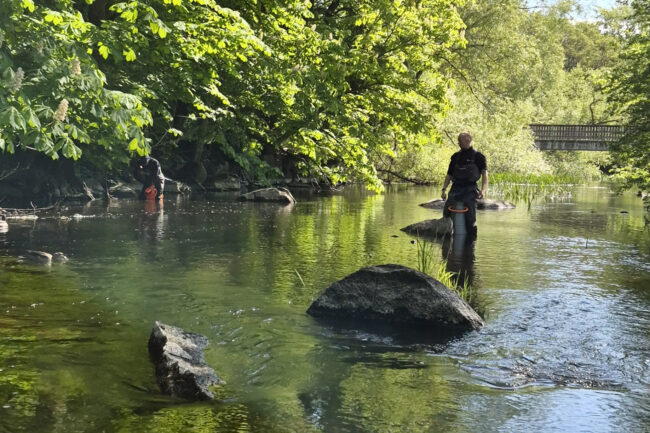
The inventory for the mussels is done with water binoculars.
In River Bräkneån and River Mieån in Blekinge, we found nine and five pregnant mussels respectively, but very few fish. Getting hold of pregnant mussels has so far gone well. The challenge has been to find host fish that the glochidia larvae can infest. This is despite the fact that the Thick shelled river mussel can have several different species as host fish. The mussels are dependent on the fish during the first period of their life and without fish there will be no new mussels.
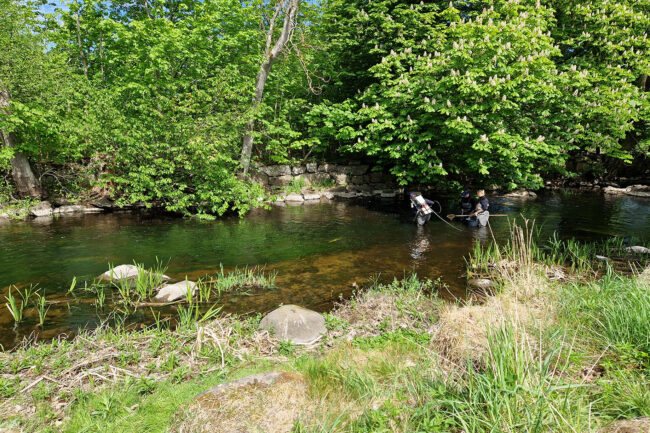
Suitable host fish are collected by electrofishing.
By putting host fish and pregnant mussels together in a fish tank, we increase the number of glochidia that succeed in infesting a host fish and can thus ensure that we get more young mussels. Artificial infestation is really just a way of enhancing a process that occurs naturally. It is a simple and effective way to strengthen stocks and increase regeneration. Similar projects have been carried out before with good results for mussel populations.
All that remains is to make regular visits to check that the fish are doing well and to make sure that the infestation has been successful. These efforts will be repeated for several years to come.