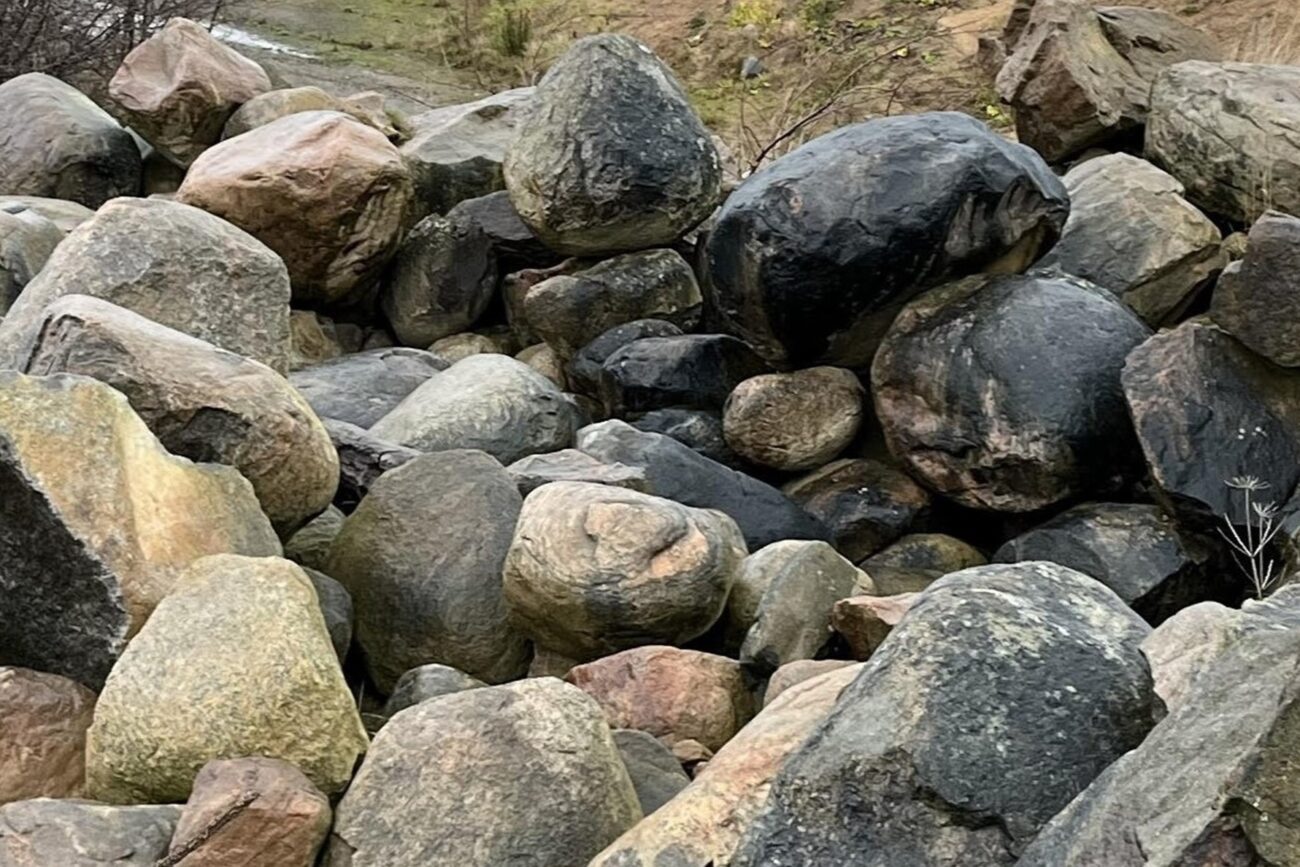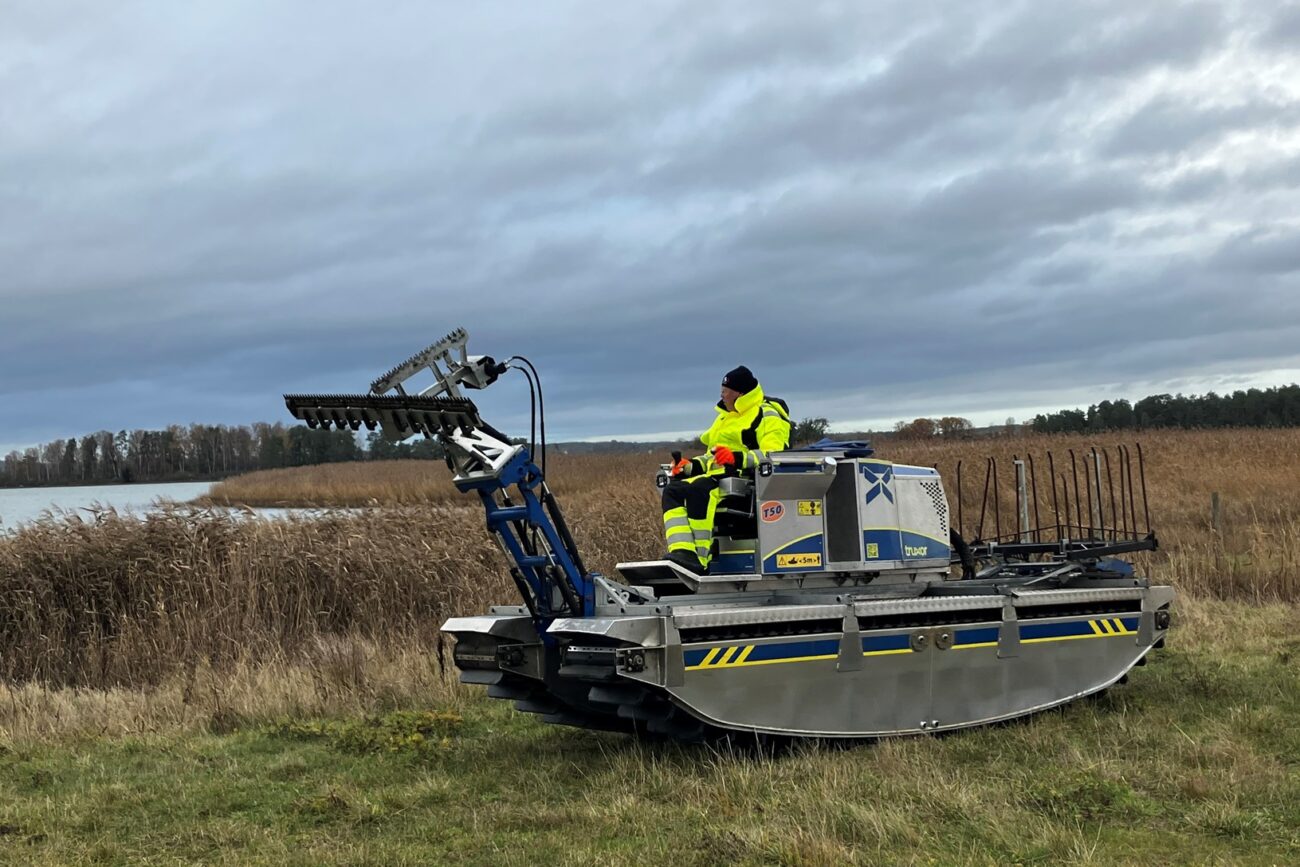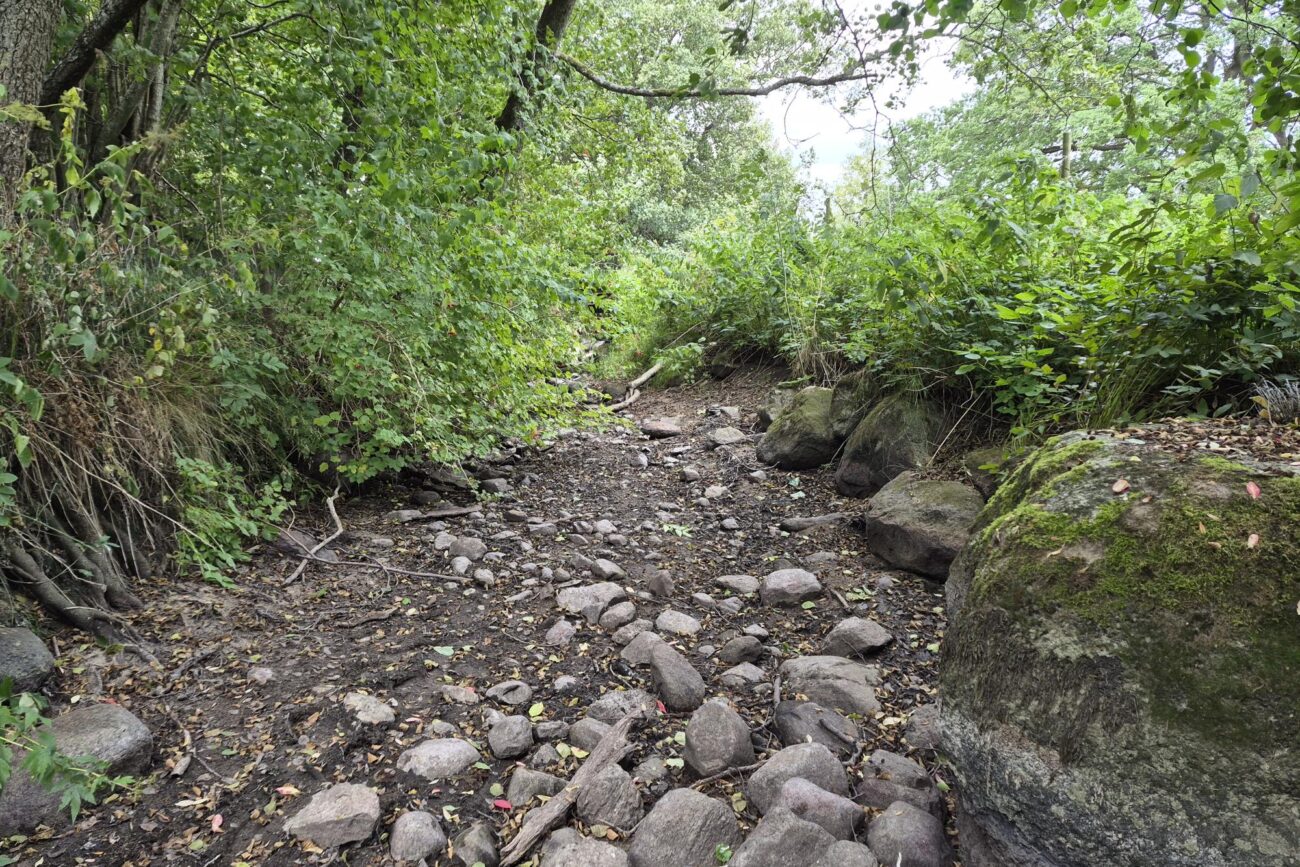
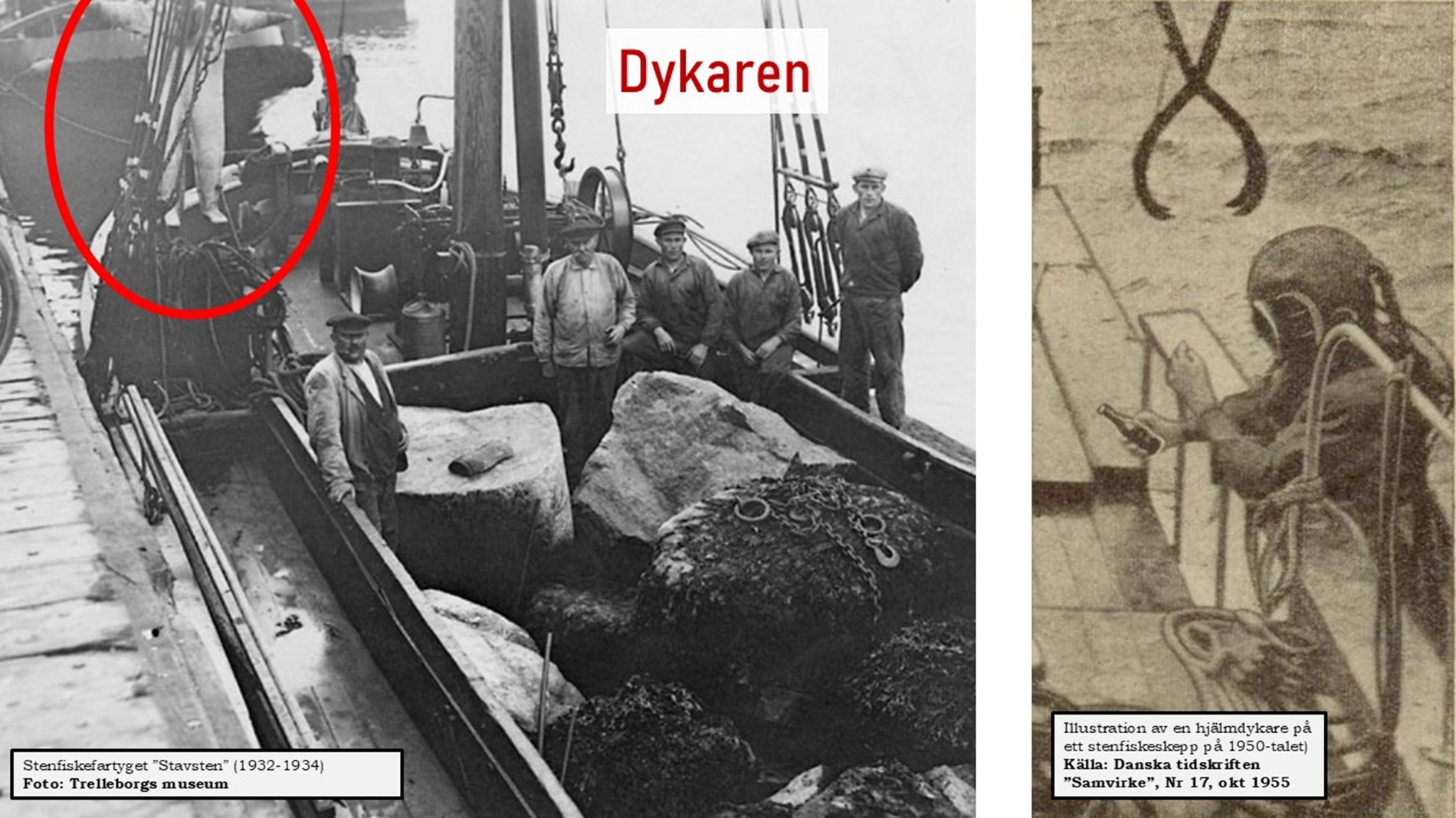
A large amount of stones dredged from the Öresund and Skälderviken was used in the expansion of ports on Skåne’s west coast. By 2027, stones from land will be used in the opposite direction to restore stone habitats on the seabed.
During Week 43, Jonas Gustafsson presented the history of stone fishing in Skåne and the plans for restoring stone reefs in Skåne as part of the Improve Aquatic LIFE project. On one occasion, he visited the Swedish Society for Nature Conservation in Landskrona and the Borstahusen Museum Association. On another occasion, the Råå Museum Association was visited.
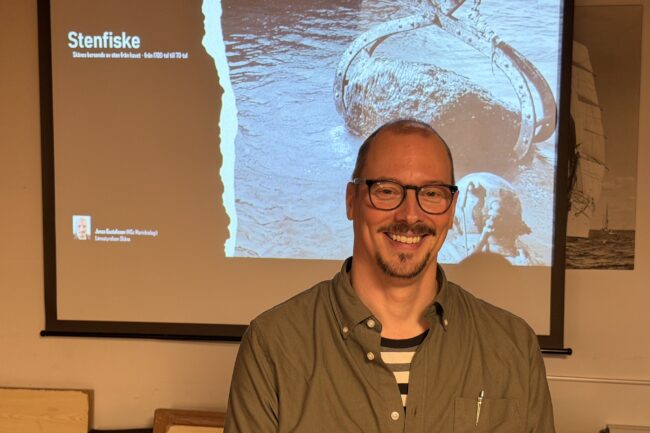
Jonas Gustafsson gives a talk on historical stone fishing. Photo: Maria Forshufvud
The more we understand about historical stone fishing, the better our restoration efforts will be
Many questions were asked about both stone fishing in Skåne and the upcoming restoration of reefs. Many communities along the Öresund coast have a rich history of stone fishing. This was evident, for example, in Råå, where a grandchild of a stone fisherman who was active in the late 1800s was sitting in the audience. “The more we understand about historical stone fishing, the better our restoration efforts will be,” says Jonas Gustafsson, who works with stone reef restoration within Improve Aquatic LIFE.
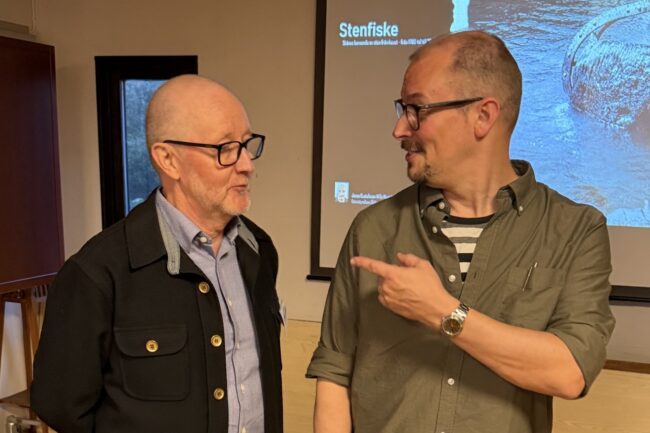
Stefan Nilsson from the River Råån Museum Association in conversation with Jonas Gustafsson of LIFE. Photo: Maria Forshufvud