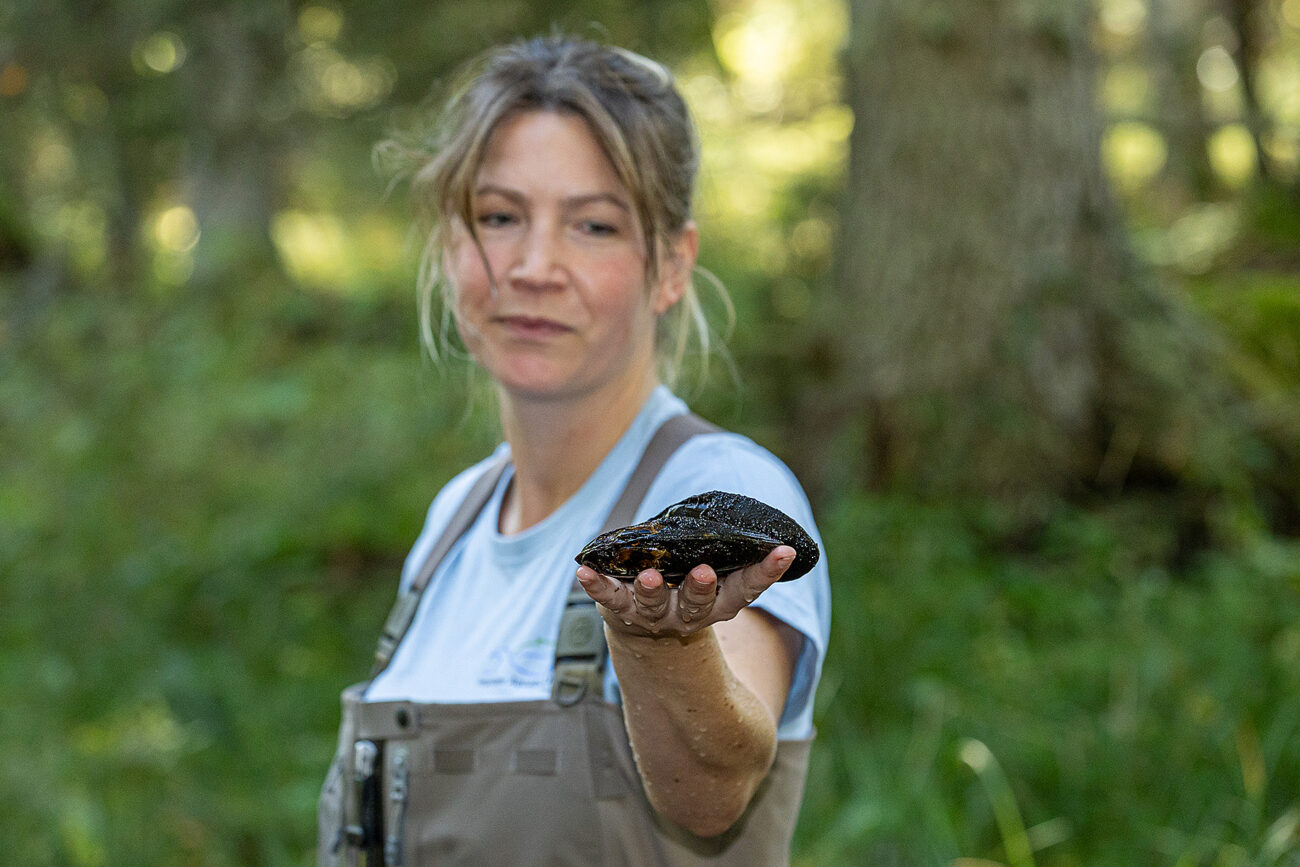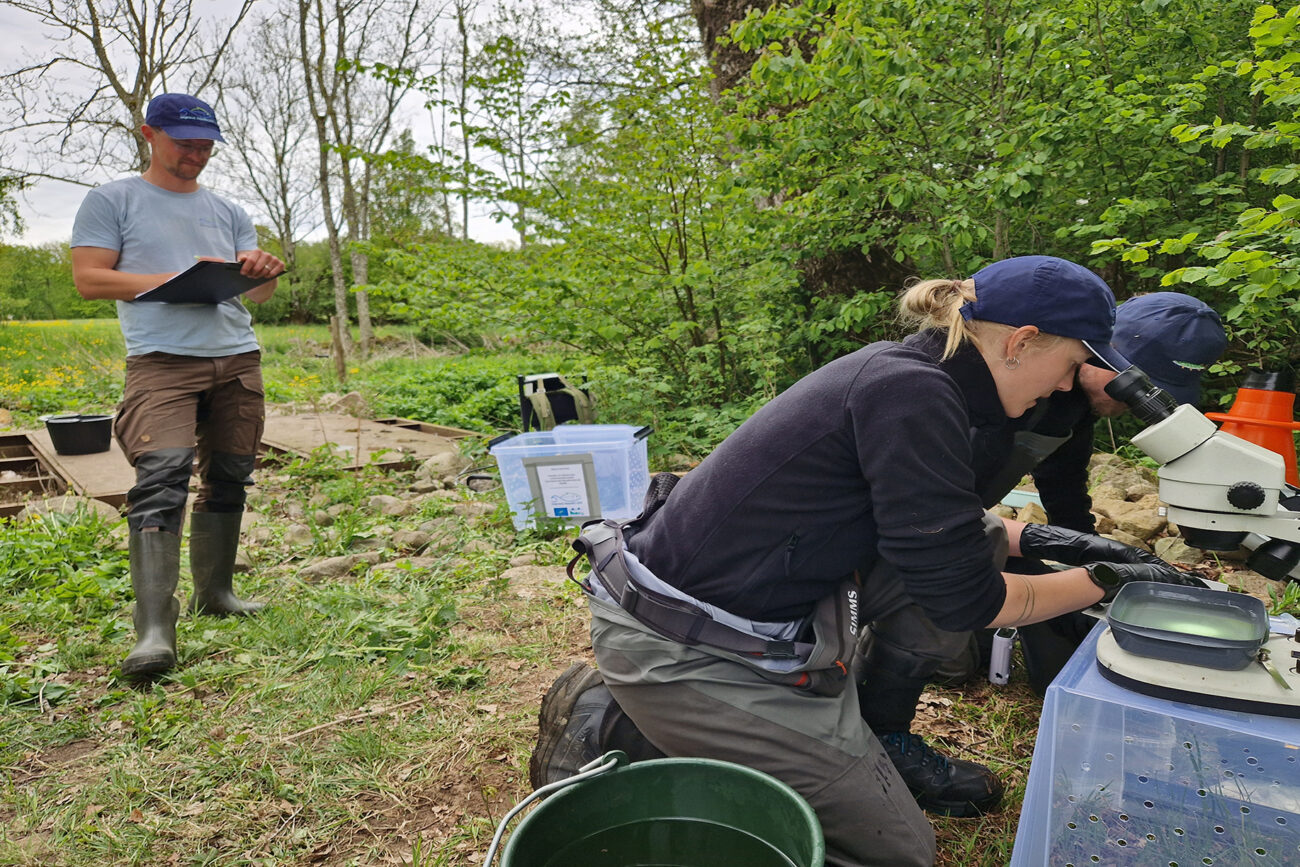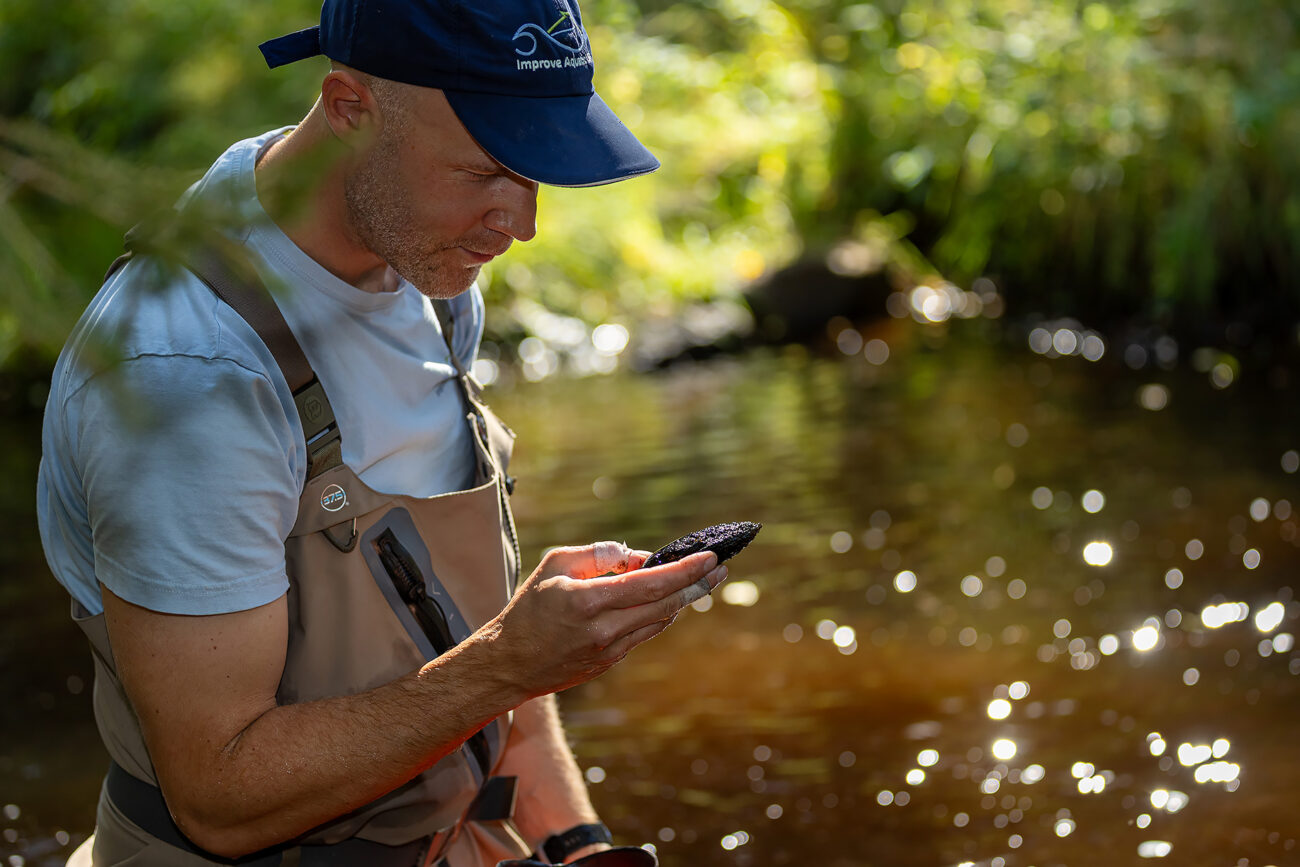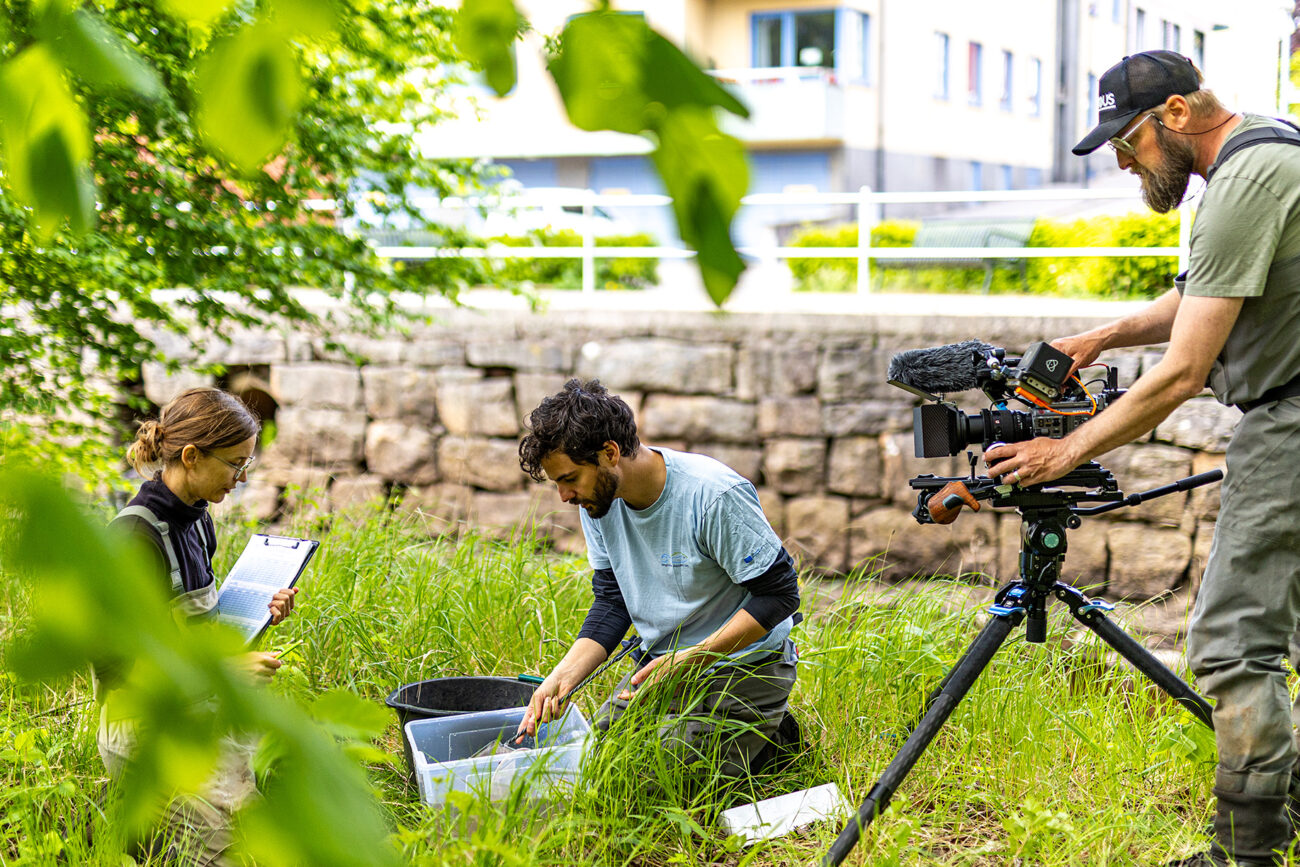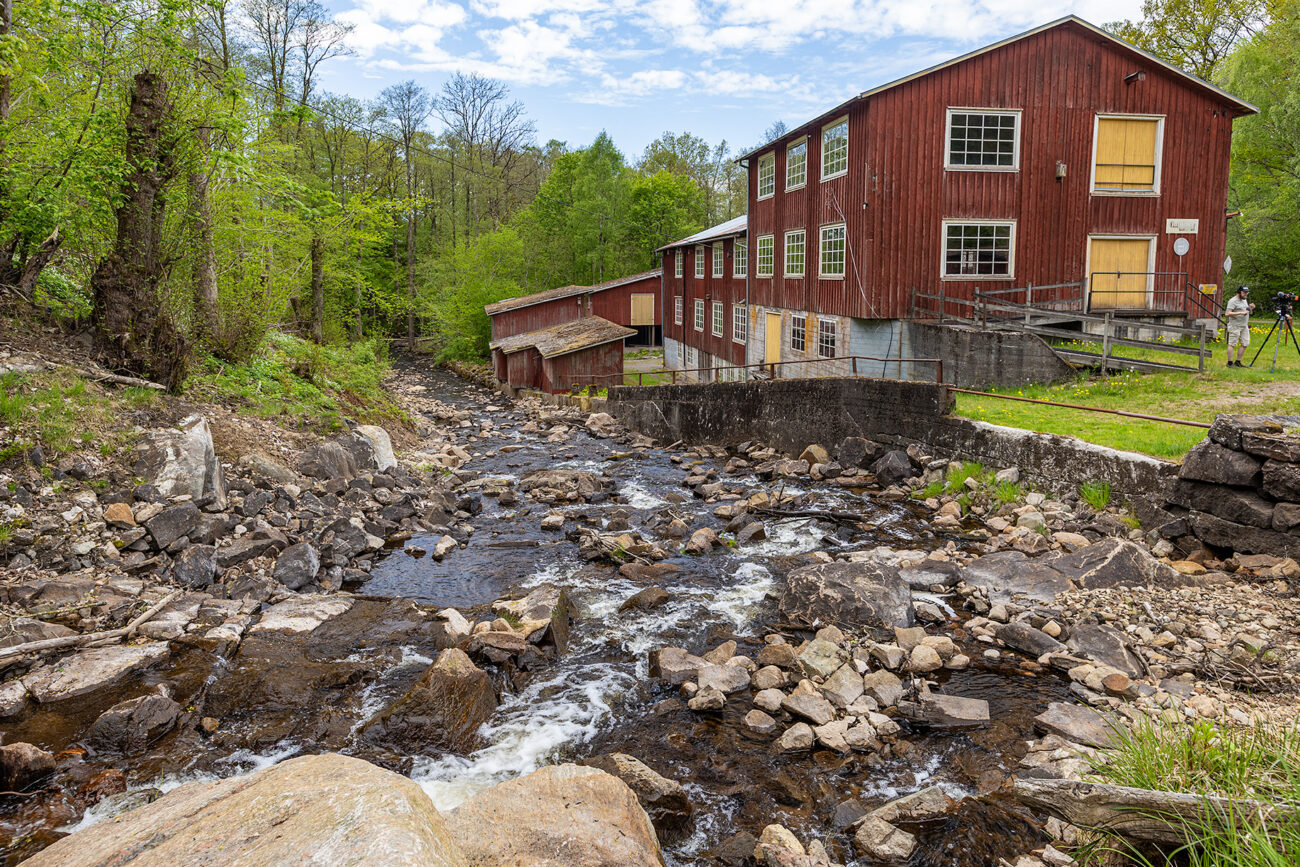
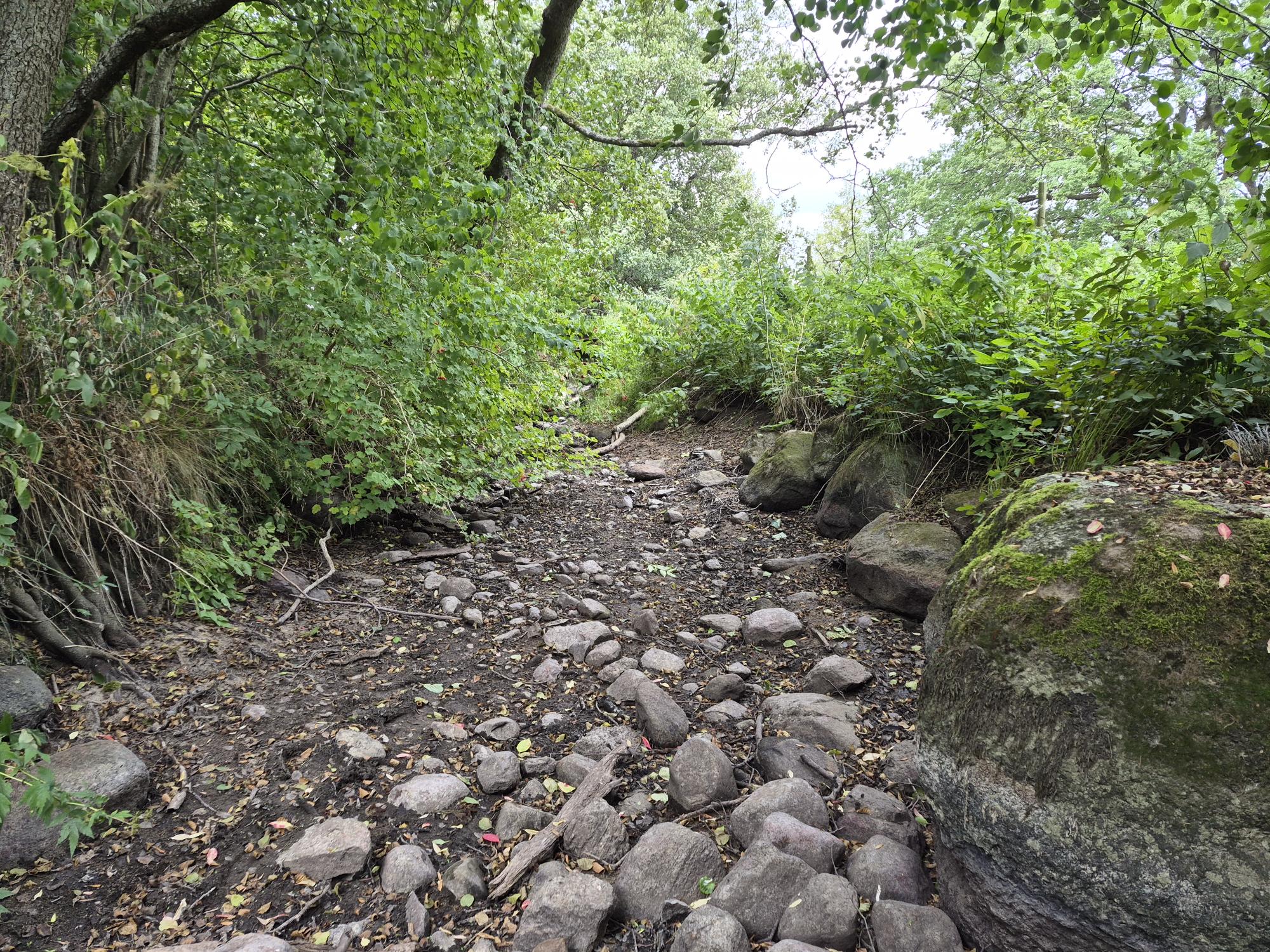
Throughout the summer, there have been frequent reports of rivers with extremely low flows, some of which have even dried up. In one of the project’s target rivers, the Bråån—which is part of the River Kävlingeån watershed—the disaster was a reality. During a visit to the Bråån in early August, it was observed that the water in the riverbed had largely disappeared. The Bråån is one of Skåne’s most important rivers for the endangered thick shelled river mussel. An effort was launched to relocate the mussels from the dried-up sections to parts of the Bråån where there was still sufficient water. Approximately 3,000 mussels were moved from the dried-up sections and placed in pools in deeper parts of the river.
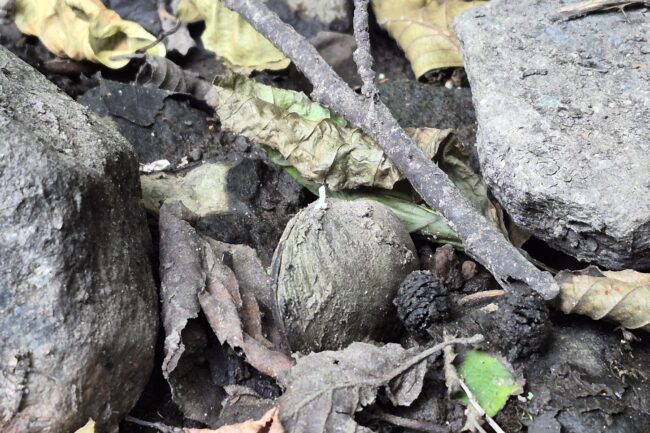
A thick shelled river mussel is lying between two rocks, drying out.
It can be difficult to relocate mussels because you don’t know how they will react to the environmental conditions at the new site, but the rescue operation was necessary and successful. By early September, water had returned to the dried-up areas, and a relocation back to their original habitat was organized for the mussels. A very low mortality rate of only 1–2% of the relocated mussels was recorded, and the mortality was likely due to the fact that they had been on dry land for some time as a result of the drying out. The relocation likely saved large portions of the Bråån mussel population. Unfortunately, many thick shelled river mussels had already died in the dried-up river. Mussels can survive short periods of drought, but the discovery of dead mussels along the dried-up stretches suggests that this dry spell was too long.
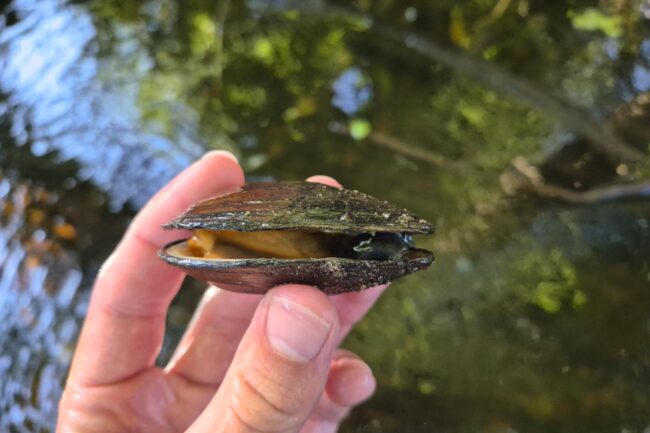
It was impossible to relocate all the mussels in the Bråån River, and those that were not relocated were later found dead.
In Bråån, the project is conducting artificial reproduction of the thick shelled river mussel by collecting mussel larvae (glochidia) from pregnant mussels and infecting the mussel’s host fish with the larvae. This work is now more important than ever.
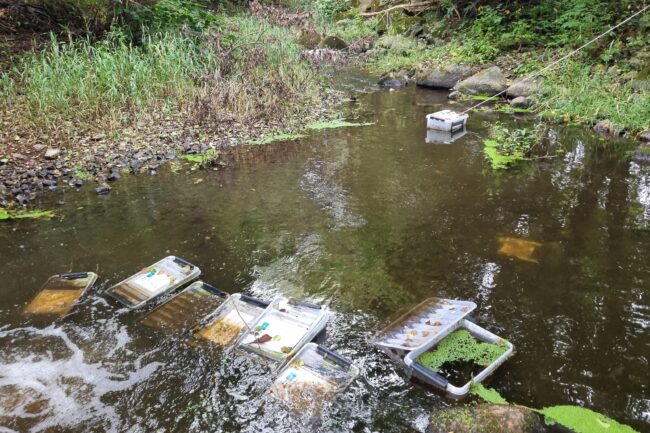
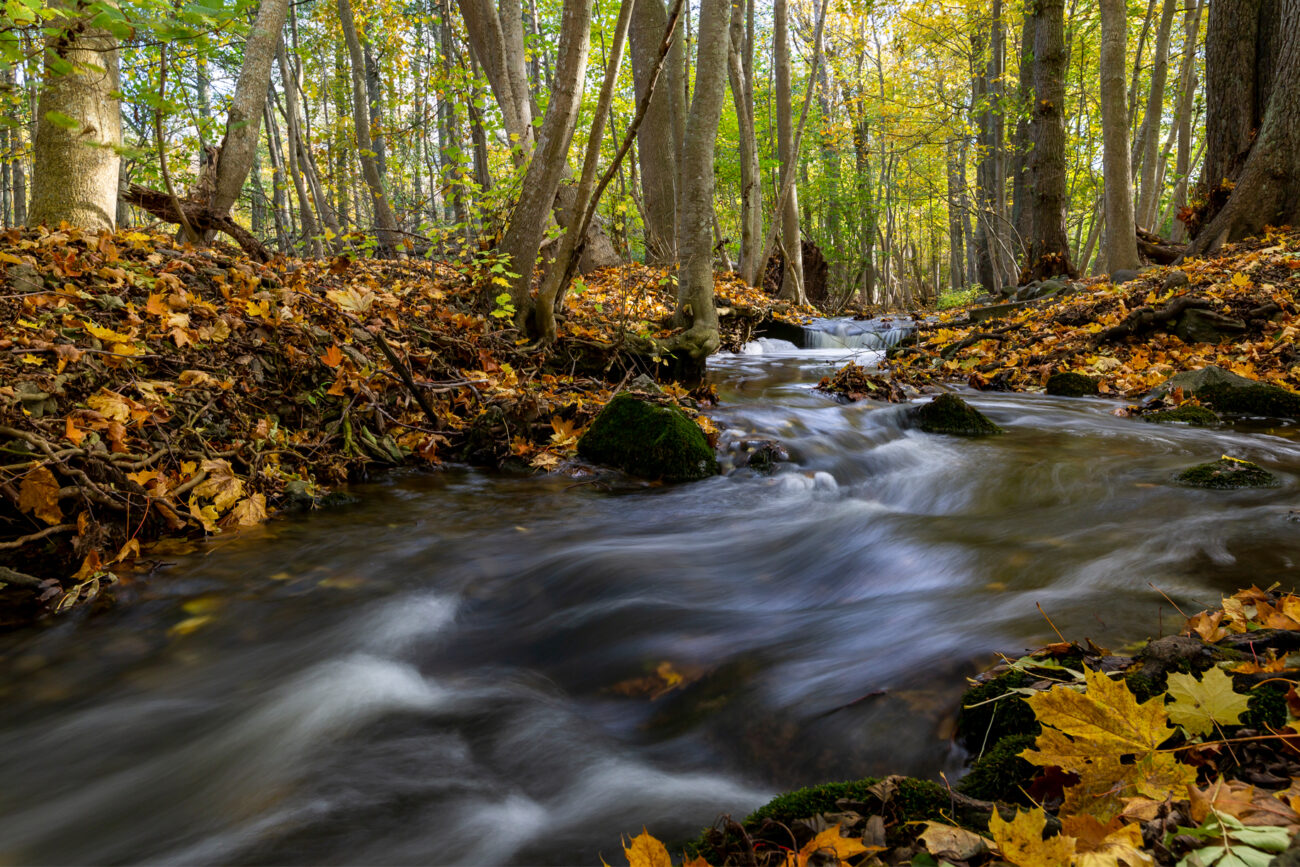
Some of the temporary homes of the thousands of mussels in the marshes along the Bråån River during the drought.