Researchers and experts from around the world gathered in Bragança, Portugal, to share knowledge about freshwater mussels. At the event, Emilia Nordfeldt presented the work on the restoration and conservation of the freshwater pearl mussel and the Thick shelled river mussel within the Improve Aquatic LIFE project.
Emilia and Daniel had the honor of attending the third European Freshwater Mollusk Conservation Society (FMCS) Symposium, a four-day event in beautiful Bragança, Portugal.
Three of the days were filled with exciting presentations by mussel researchers from around the world. We learned about everything from invasive species to ecosystem services, evolution, population genetics, and conservation biology.
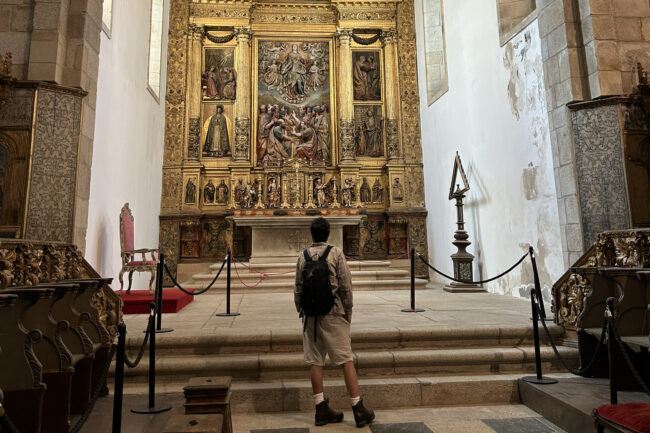
During the conference’s closing excursion, participants visited the cathedral in the medieval town of Miranda do Douro, near the border between Portugal and Spain. Photo:Emilia Nordfeldt.
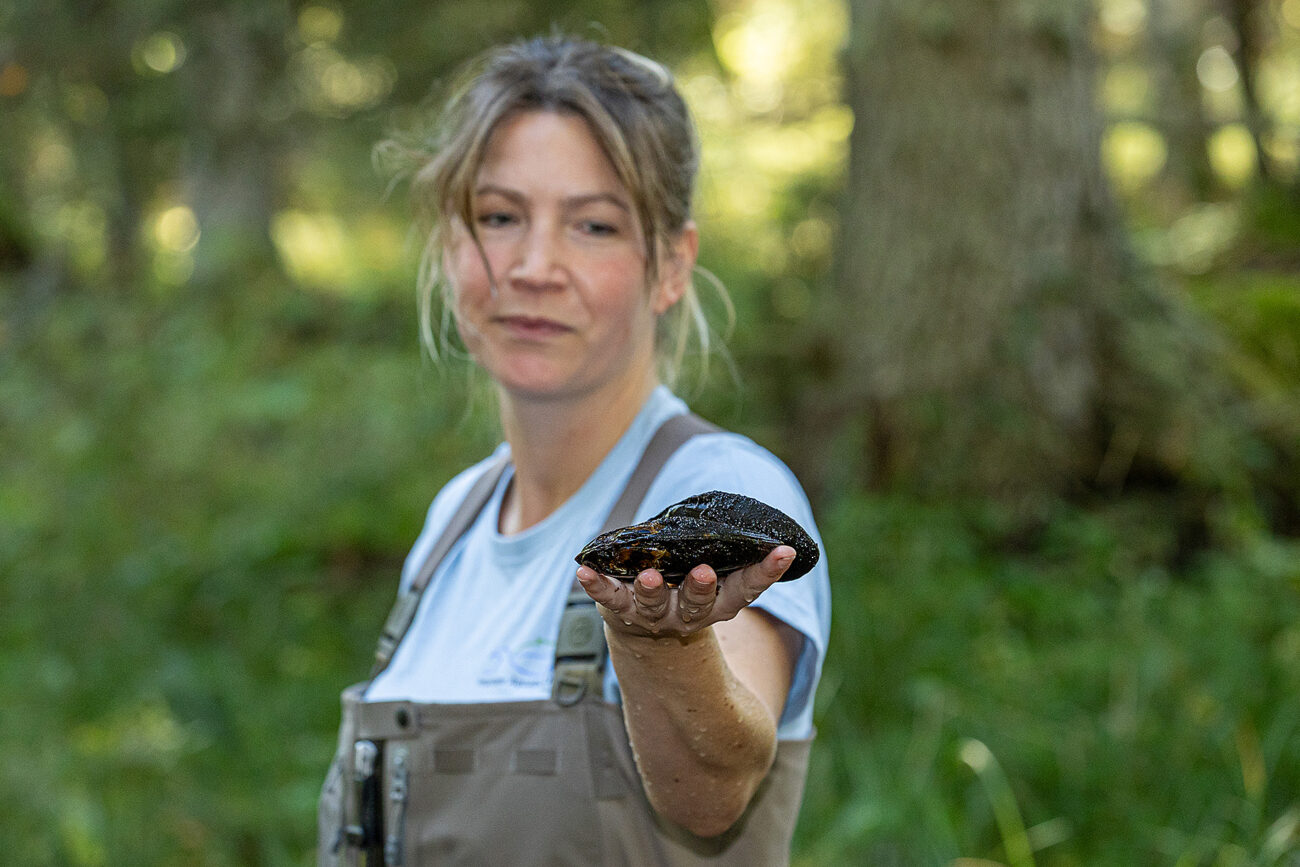
With the help of Niklas Wengström and Daniel Wedesten, Emilia presented on the conservation efforts and restoration work we are conducting for the Freshwater pearl mussel (Margaritifera margaritifera) and the Thick shelled river mussel (Unio crassus) as part of the Improve Aquatic LIFE project.
On the conference’s final day, we went on an excursion to the charming medieval town of Miranda do Douro, located right next to the gorge along the Douro River, which forms the border between Portugal and Spain.
There, we visited the town’s beautiful cathedral and listened to a performance featuring their traditional bagpipes.
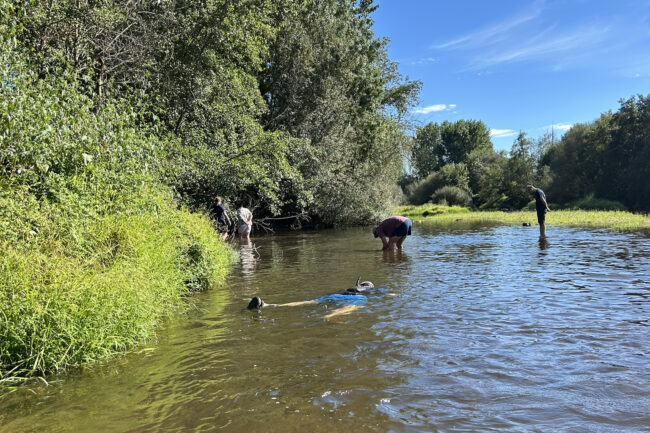
About 60 biologists searched for freshwater mussels in the Rio Rabaçal during the conference’s final field day. Photo:Emilia Nordfeldt.
The field trip naturally concluded out in the water at the Rio Rabaçal. There, about 60 biologists happily waded into the river to look for mussels.
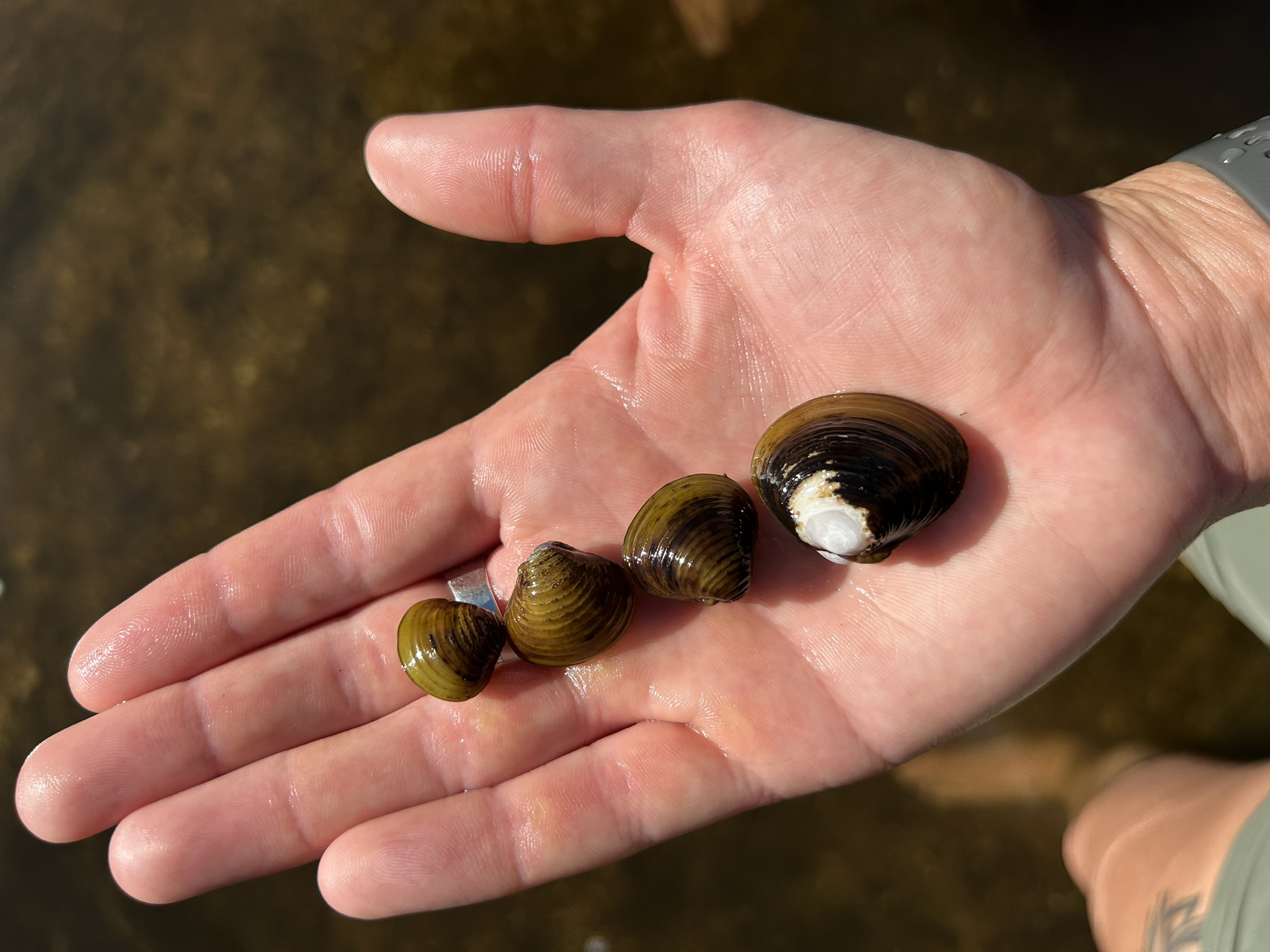
After a few minutes of searching, we stood there admiring a variety of species, including the native Anodonta anatina, Unio delphinus, Potomida sp., and the invasive Corbicula sp.