

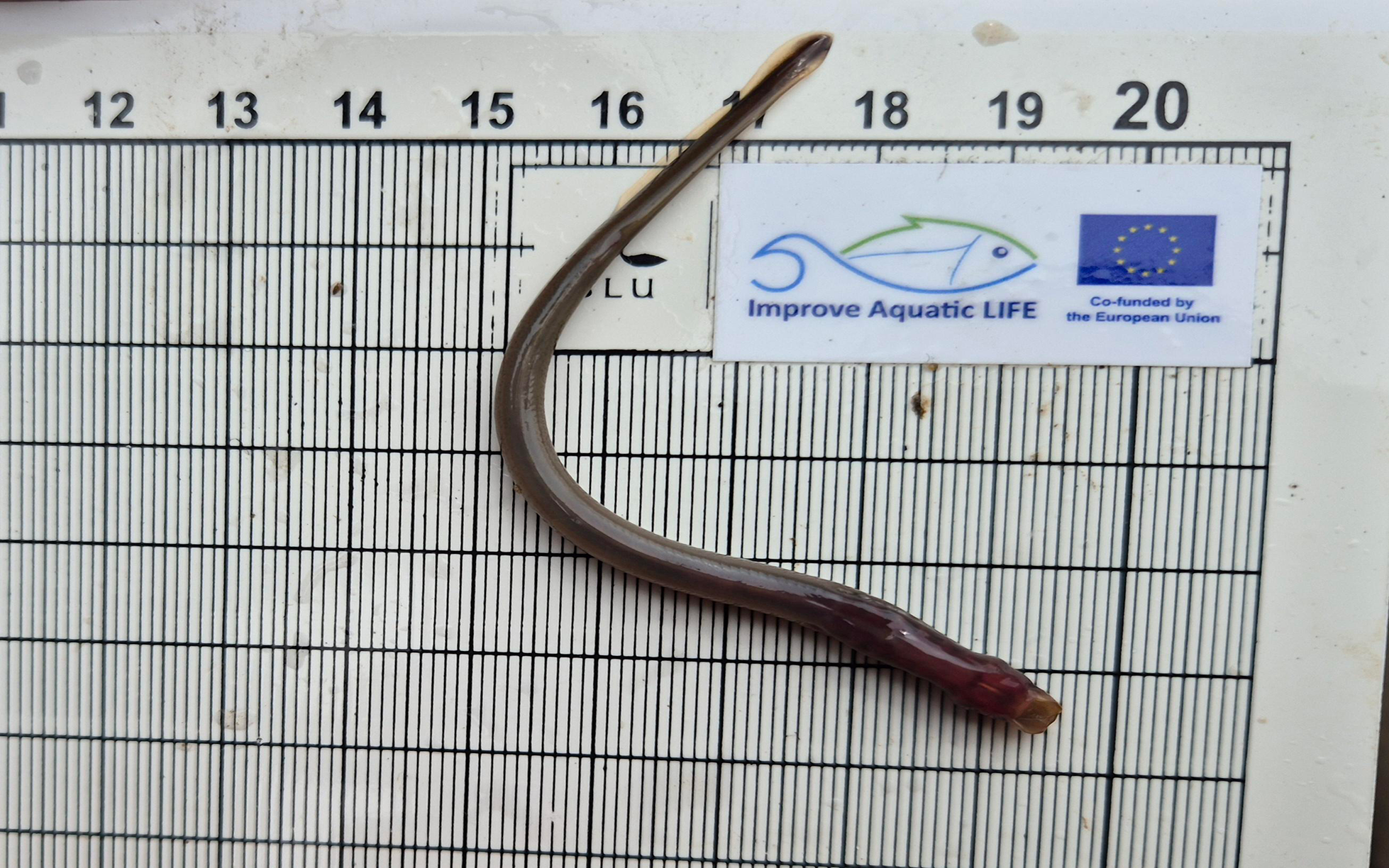
The endangered sea lamprey, which is a target species in the project, starts to migrate up from the sea to its spawning grounds in early summer. The first sea lamprey migrated up the River Ätran a few days ago to find a mate, and now we are eagerly awaiting more to ascend the River Ätran, which is its most important breeding water in Sweden.
Within the project, we are working on various measures to improve the situation for sea lamprey. We inventory the location of juvenile lampreys, remove migration barriers that prevent the species from reaching its spawning grounds, develop the methodology for inventorying juvenile lampreys and create sediment banks where the fish live their first years of life before migrating to the sea.
Traditional electrofishing involves surveying flowing water, but when looking for lampreys, it is done in calm waters at sediment banks. By electrofishing at sediment banks, where the fish live their first time before they swim out to sea as adults to grow, you can find and catch lampreys. During the spring and early summer, we survey the River Ätran for juvenile sea lamprey in order to develop the survey methodology for sea lamprey in particular, but also to gain better knowledge of how many juvenile sea lamprey are in the River Ätran.
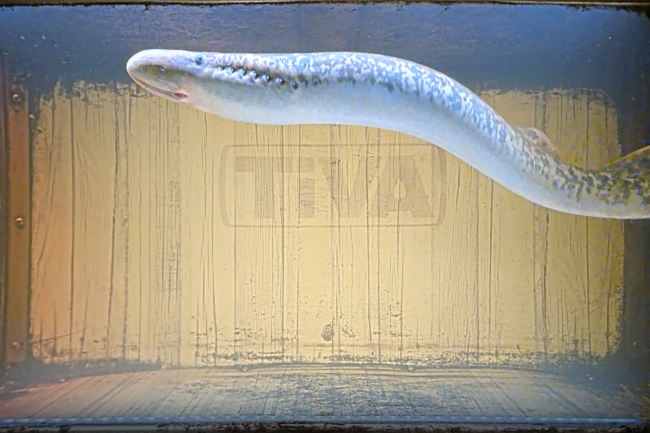
An adult individual passes through the fish camera located in the River Ätran.