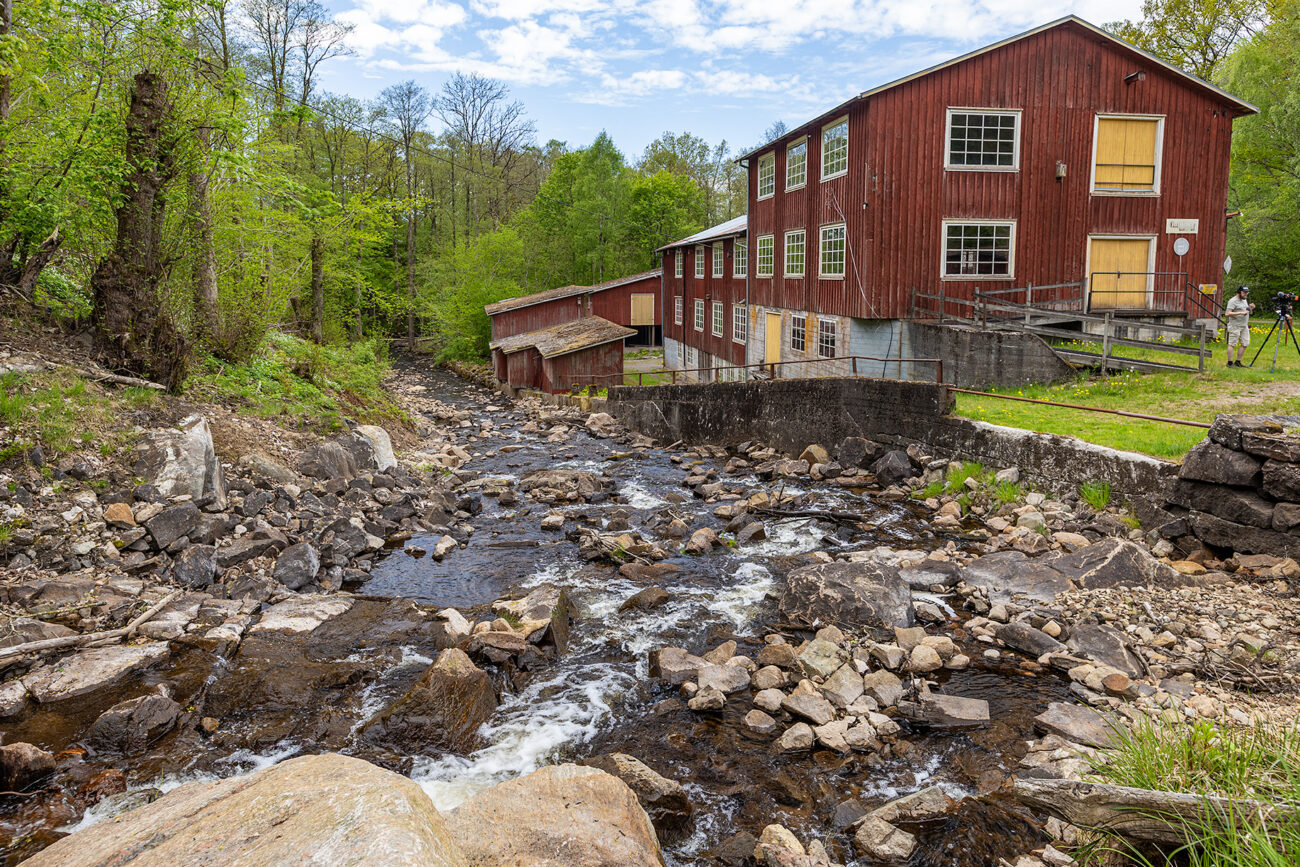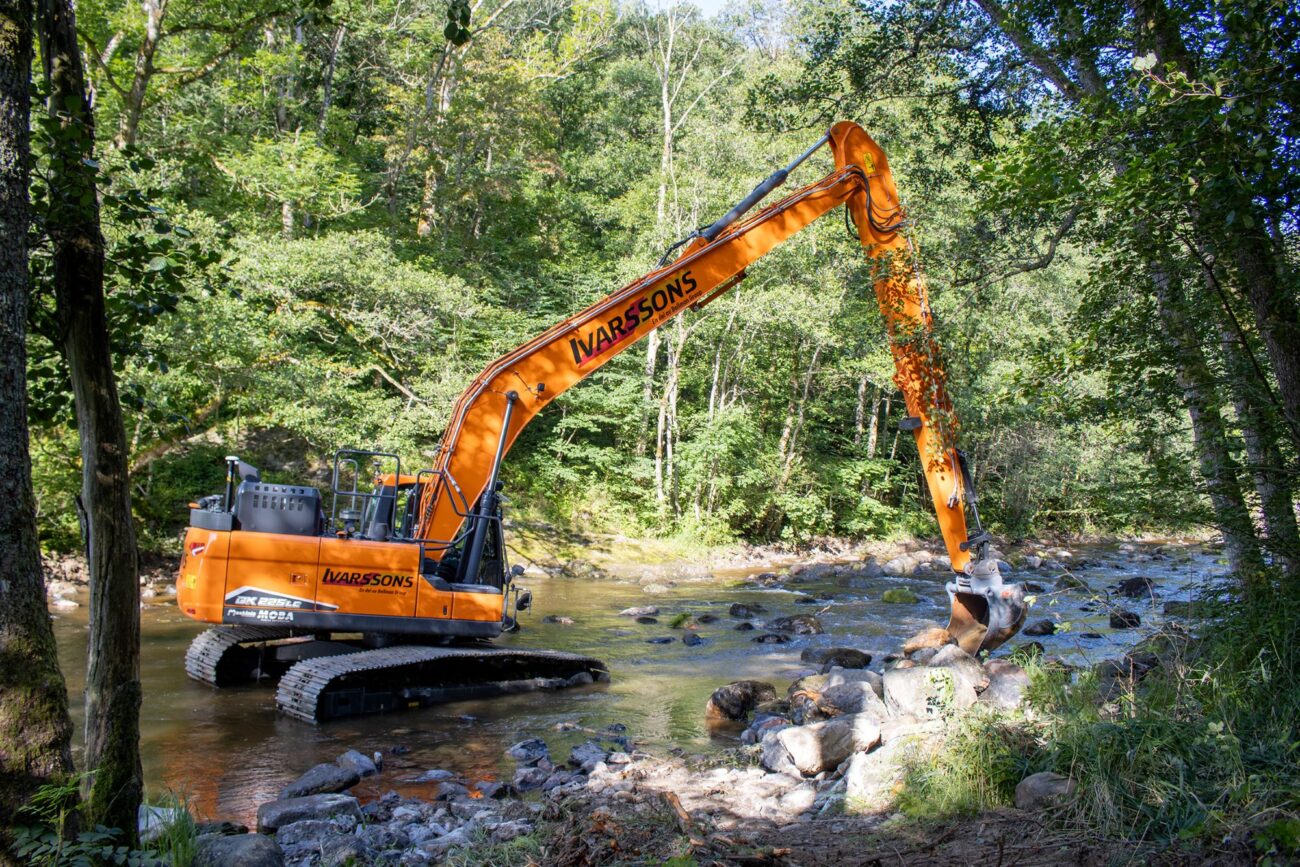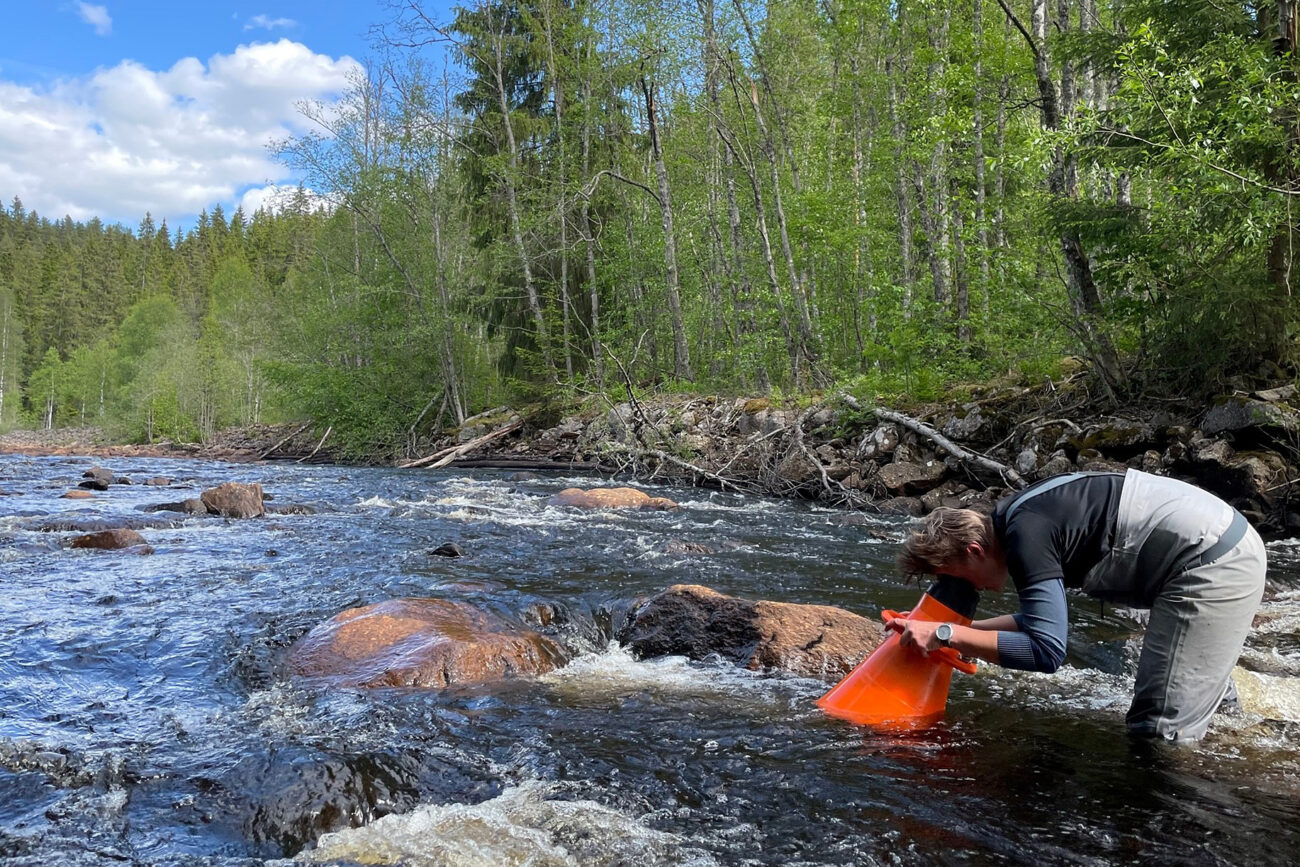
Torp hydropower plant, owned by the Swedish Environmental Protection Agency, is to be removed and replaced by a new, lower dam with an inlet. Permit applications for this large-scale project are still being processed in court.
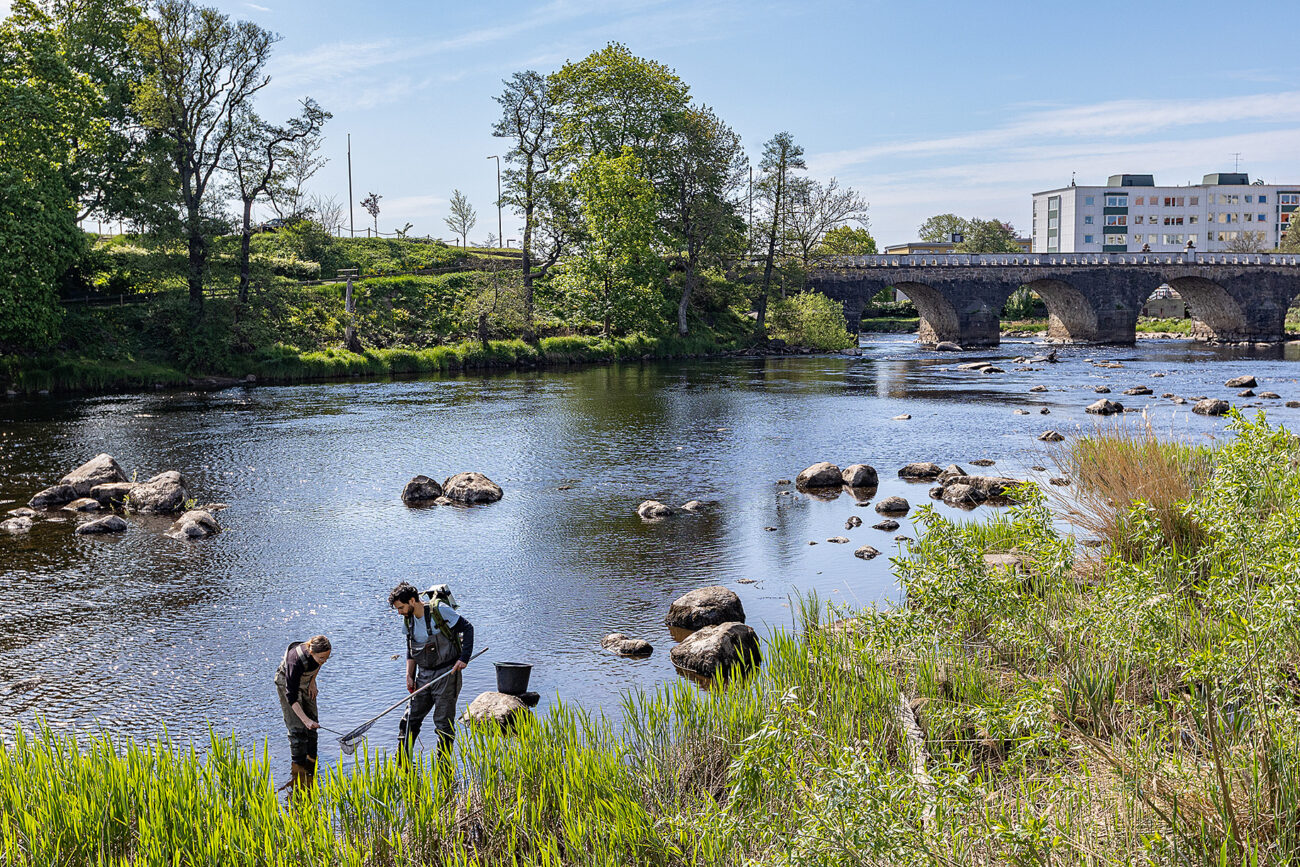
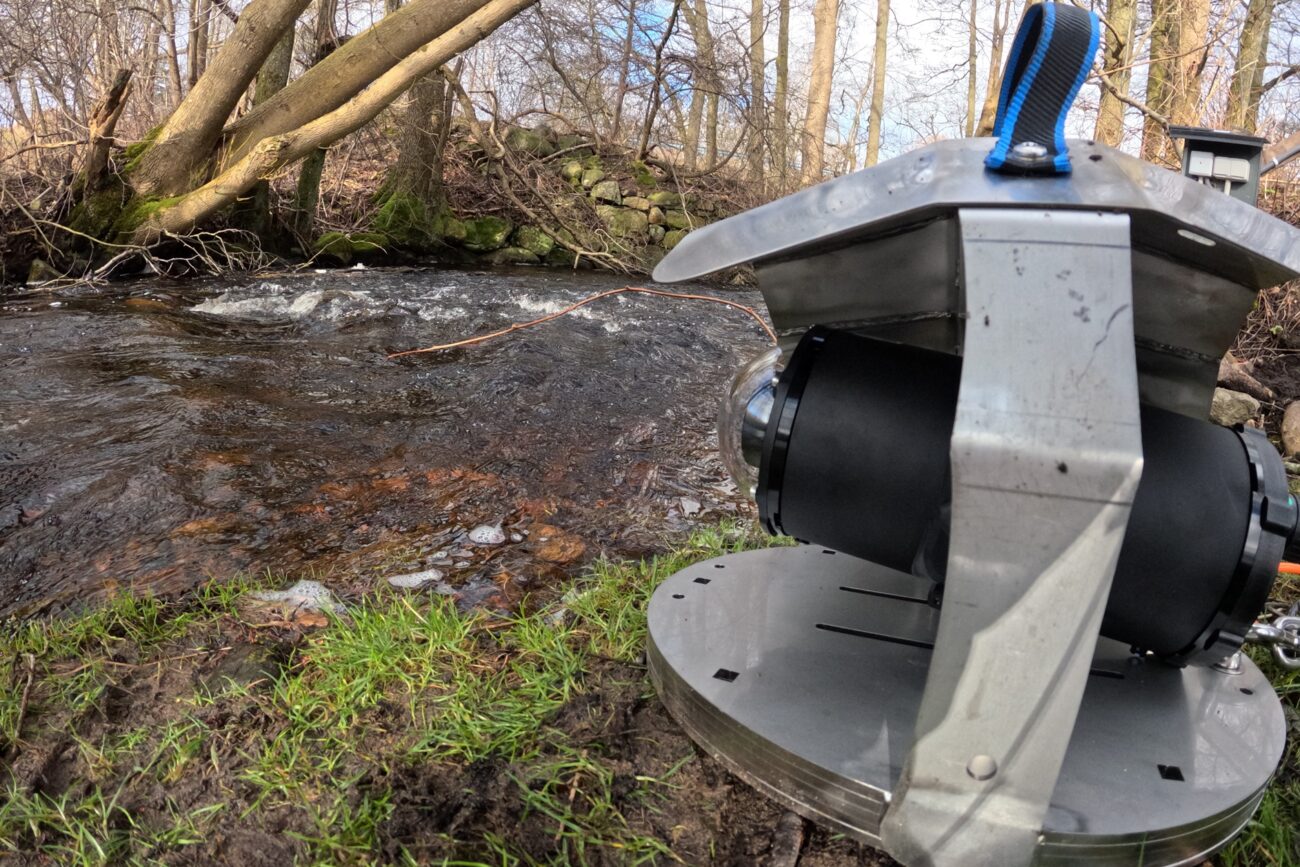
In order to monitor the effects of the removal, Karlstad University (KAU), together with the County Administrative Board of Västra Götaland (CABO), is conducting an extensive study on salmon migration. A total of forty adult salmon migrating upstream to spawn will be captured and tagged with acoustic transmitters, ten of them also with radio transmitters. Hydrophones (receivers) that detect signals from the transmitters have been placed at suitable locations in the river, primarily around the power plant as well as in and upstream of Lake Kärnsjön, but also at a few other locations downstream. There are also receivers in Gullmarsfjorden that SLU has placed that can pick up these signals. The study will be repeated once the power plant has been removed and the new dam with inlet is in place. This will hopefully be possible in 2030 or 2031.
The fish are caught in the salmon ladder and tagged
Field work began on September 10-11 with attempts to catch salmon in the basin staircase (salmon ladder) of Brålandsfallet. At that time, water flows were still very low, but three salmon were nevertheless caught and tagged. The following week, rainfall increased the flow, stimulating migration and more salmon could be tagged. The last salmon was tagged on September 22.
In the coming months, KAU’s PhD student Mattias Hansson, together with thesis students Samuel Andersson and Lisa Schüttler, will monitor the salmons movements and behavior. This will be done both via the stationary receivers and in real time using radio recievers. The experiments are led by Olle Calles (KAU) and Mikael Ljung (CABO).
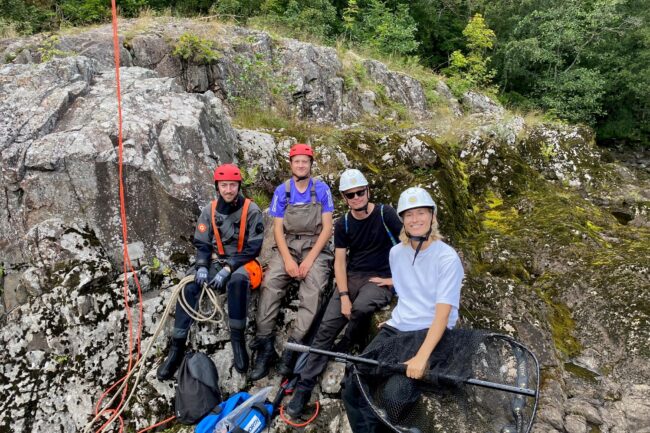
KAU team from left: Mattias. Samuel, Olle and Lisa.
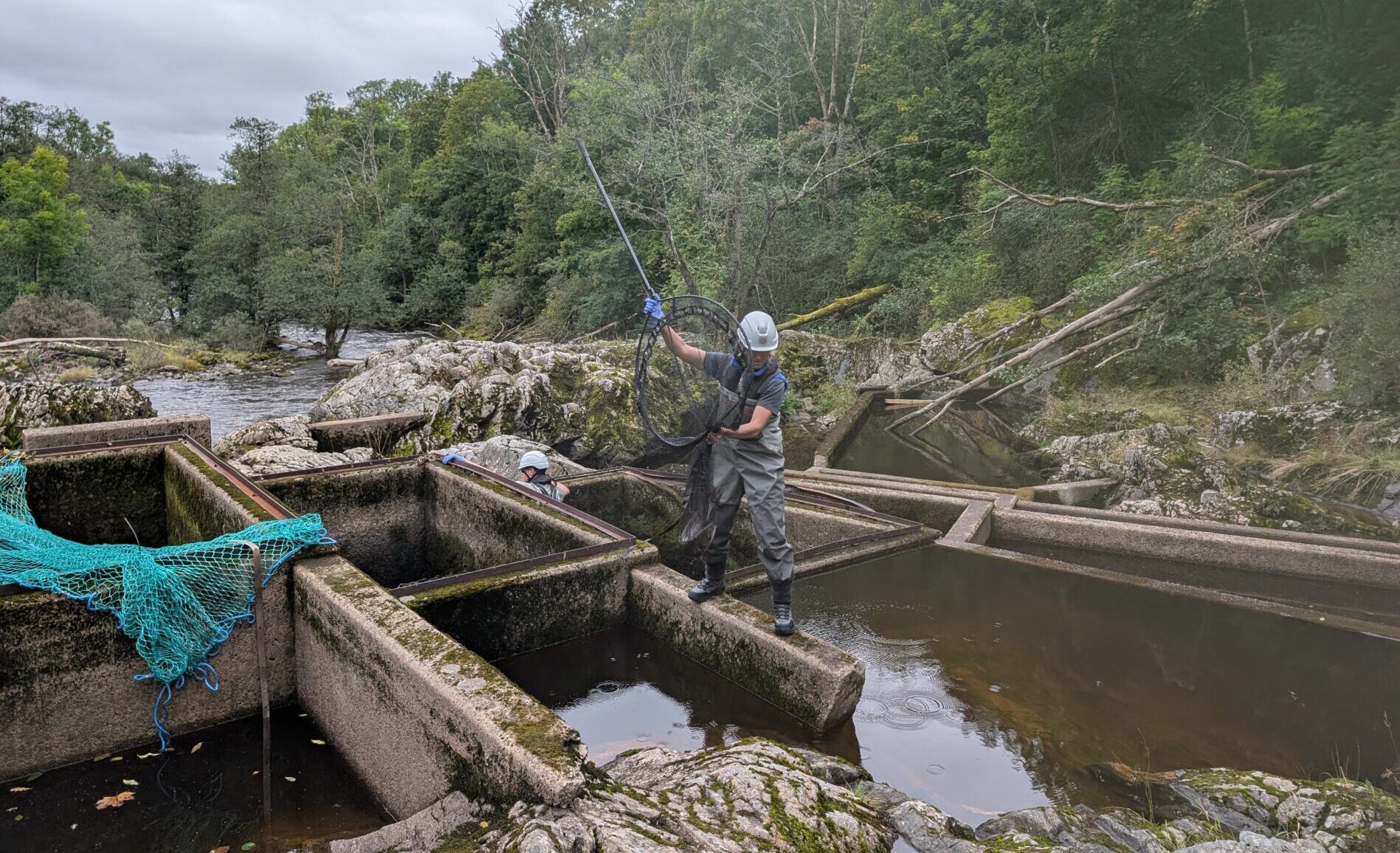
Lisa hurries off with a caught salmon…
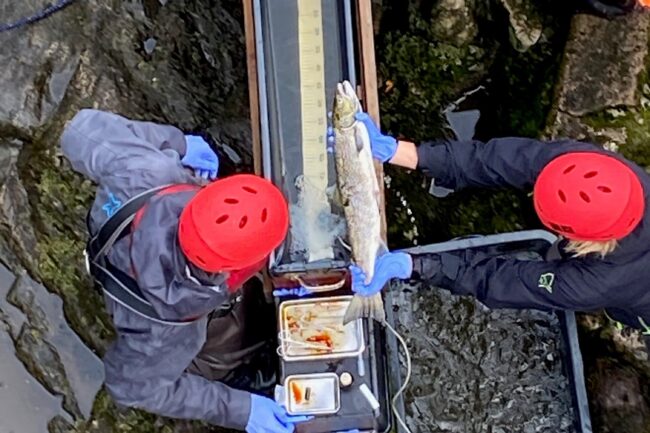
… to the field lab where the salmon are anesthetized and fitted with transmitters …
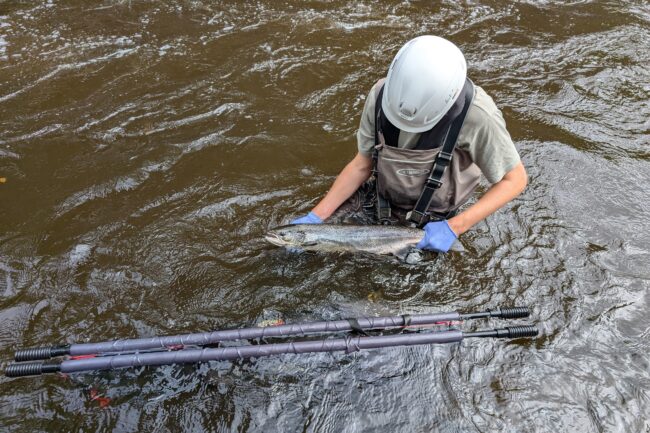
… after which it is placed in the “recovery tank” and, once it has fully recovered, is released to continue its migration upstream to the spawning grounds.
Photographer Mikael Ljung
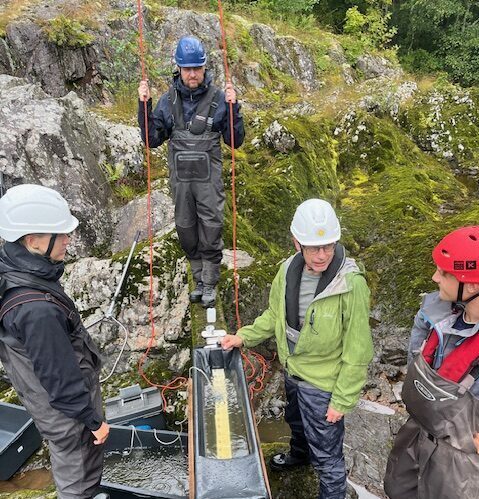
Today’s work is complete and the equipment will now be lifted up to the footbridge spanning the waterfall
Photographer Mathias Hansson